Basic weaknesses in True Solo
Basic weaknesses, lurking in the depth of your deck, are a necessary evil to deal with in Arkham LCG. In many way, their effect is not that different playing True Solo or multiplayer. But there is also key differences that must be accounted for in True Solo play.
Key differences for basic weaknesses in True Solo
Of course, some of the basic weaknesses, such as Narcolepsy, are only playable in multiplayer.
The others can play exactly the same, or have an effect drastically magnified by the specificities of True Solo play. The main differences between multiplayer and True Solo are:
Enemy weaknesses
Because the most common way to draw a weakness is in the upkeep phase, drawing an enemy weakness has a good chance to have you start your next turn having to deal with two.
Because in True Solo, your deck has to be polyvalent, it becomes much harder to be equipped to deal with two enemies in a single round.
Double action discard weaknesses
A lot of weaknesses gives the player an option to spend two action to discard it. In multiplayer, anyone in the investigator’s location can spend the actions to discard its weakness. Fighters can do so on an off turn, or engage the enemy in others investigators threat area to let them clear their weakness.
In True Solo, that is not an option. A Solo investigator would have to spend the actions himself. If the investigator is engaged to an enemy, this will force the player to choose between delaying getting rid of it, with the risk of additional penalties, or taking attacks of opportunity.
Asset weaknesses
A few weaknesses are assets that occupy a slot. True Solo decks are usually heavier in assets, and it is harder to get around a missing slot.
Permanent weaknesses
Adjusting the deck and strategy for basic weaknesses
Because the basic weakness is normally added to the deck after it is finished, it is not possible to adapt your deck for it in the first scenario of the game.
You can however adapt your play to account for your weaknesses:
- Don’t draw as a last action: enemies, and weaknesses that trigger on the end of the turn will punish you with no chance to react
- If you plan to draw, do it as a first action: this is actually an advice that goes beyond just weaknesses, as drawing first maximizes the options you have. But drawing first allows you to use the rest of your turn to get rid of an annoying weakness that discards for two actions.
- Avoid drawing late in a scenario: the further you are in a scenario, the thinner your deck becomes. Weaknesses that are not drawn yet becomes more probable with each new draw. If your board is set up, actions are better spent advancing the game than drawing.
- Play around your weakness: we will get in the specifics when discussing each weakness, but a lot of them can be mitigated by adjusting your playstyle, holding a solution card, etc.
After scenario 1, you have the option to dedicate some XP to adjust your deck to better handle your weaknesses.
Basic weaknesses review
In this section, I will evaluate the impact of each non-multiplayer basic weakness in a True Solo context. The ratings will be:
- Soft: easy to deal with, minor impact, do not require a lot of deck/play adjustment.
- Average: the bulk of weaknesses. Their impact should not exceed much the double action tax on some of them.
- Impactful: these will be noticeable when they show up. They can frequently disturb the pace of a scenario, and are worth adjusting your upgrade for.
- Crippling: weaknesses that will ruin your game more often than not when drawn. If you do not opt for a house ruled mulligan of basic weakness (no one is judging you), they are more challenging to get around than any other one.
Difficulty: Easy
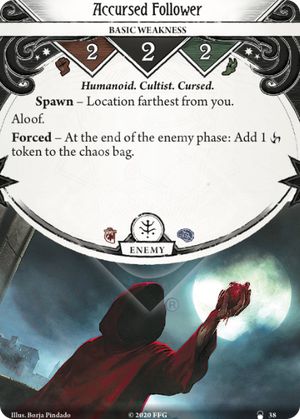
Unlike most enemies, this poor fellow is Aloof and will not attack you. Yes, it can top up the bag with curses if drawn in the first round. For some investigators, it is actually something they can take advantage of. For a lot of other, a 2XP covenant (Blasphemous or False) will negate the effect of the curse. It is a lot easier than having the whole team to deal with the curses. Even if you don’t have access to these cards, curses do not ruin that much your chances in a lot of tests. Drawn at he end of a scenario, Accursed Follower is a blank.
Adaptations: Blasphemous/False Covenant
Difficulty: Impactful
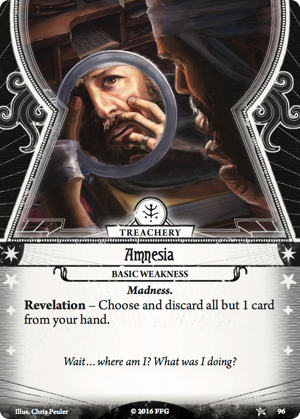
Loosing cards can cripple your chances for success. This is particularly bad drawn before your set-up is complete. It its particularly hard the deck that rely on situational cards to overcome a specific task of the game, as they are often held in hand for a while.
Adaptations: avoid using limited uses assets and situational events / skills. Be more aggressive to commit cards. Don’t draw with a big hand. Having extra card draw is a double edge sword. It can help refill your hand after Amnesia, or draw into it.
Difficulty: Impactful
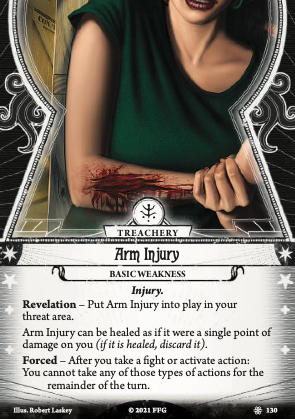
This card is probably the worst of its kind, because fighting is one of the only action type that can hardly be delayed. Drawing an enemy after this can be an issue if you cannot one-shot it. Activate is also important, as it is used on a lot of assets and scenario actions.
Adaptations: either packs effect to increase the output of a single attack (vicious blows, beat cop(2)) or include some healing (fast if possible, such as Painkillers).
Difficulty: Average
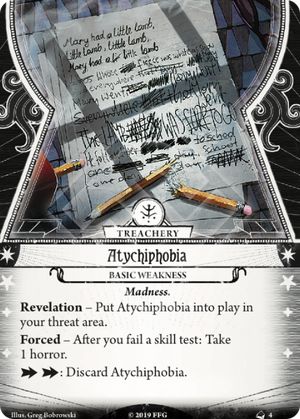
Among the cards that discard for a double action, this one is not too bad. In standard, you can usually pass most of your tests, so holding it until you have a quiet turn (if drawn early) or ignoring it (if drawn late) should not cost you too much. This is definitely a card that makes bad token pull worse, though.
Adaptations: unless you are playing Stella, not much adaptation is needed. Pete Sylvester makes this card almost a blank.
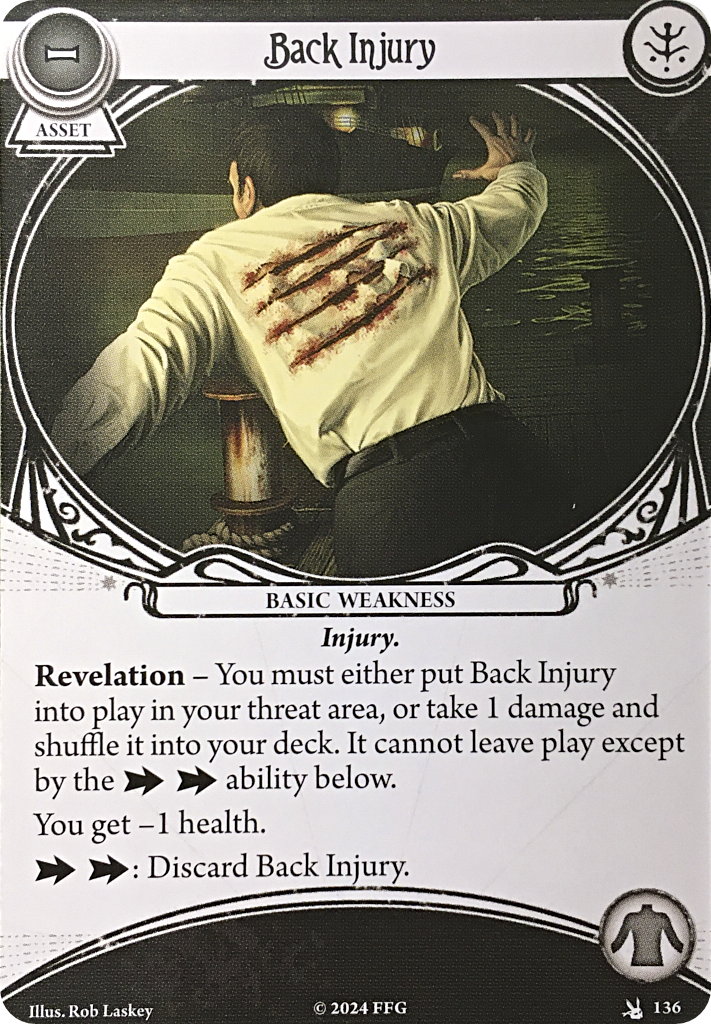
Difficulty: Easy
Unless you are using the body slot, this card reads: -1 health. This is quite soft.
Adaptations: no adaptation required. Don’t have one remaining health on your investigator. If you are using Backpack, try to play the cards in it as soon as possible.
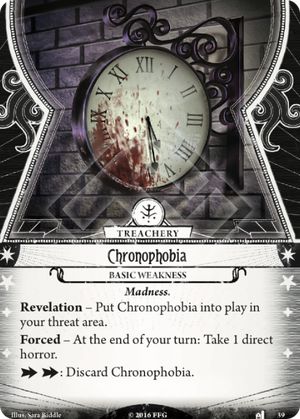
Difficulty: Average
This cards reads a lot like Atychiphobia, but plays a bit differently. The main difference is that the horror it deals is direct and certain. Delaying to get rid of this this even for one turn is a guaranteed horror. Ultimately though, this will probably cost not more than a horror and two actions, so it still manageable for most investigators.
Adaptations: because the horror is direct, soak is not an option. Passive healing, such as Ancient Stone (Minds in Harmony) is a possibility, but the best is just to get rid of it ASAP if the scenario is not about to end.
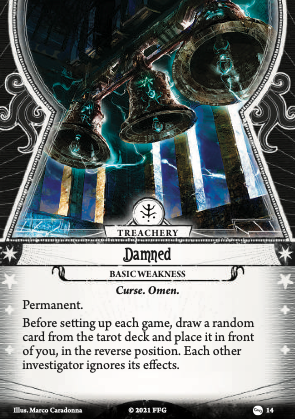
Difficulty: Impactful
As a permanent, this card will always impact the scenario to some extent. Its effect is quite variable depending on the tarot, though. Some are very mild (The Fool), while some other can be quite tough in True Solo (The Magician, The Chariot). Overall, you may have one or two hard starts because of this weakness in a campaign.
Adaptations: not much to do, it is quite rare to adapt to 22 possible tarots.
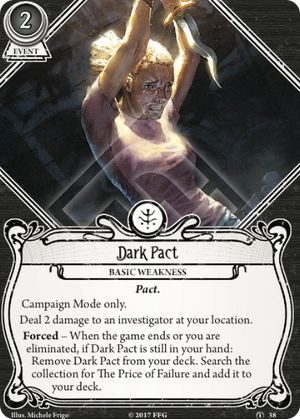
Difficulty: Average
This card reads worse than it plays. The threat of The Price of Failure is big, but in reality it is often not that difficult to play Dark Pact just before the end of a scenario. The damage is not direct, and you control when to deal it. Still, it is two resources, two damage, and an action to get rid of.
Adaptations: investigators with low health might want to take a bit of extra soak/heal if they have this weakness.
Difficulty: Easy
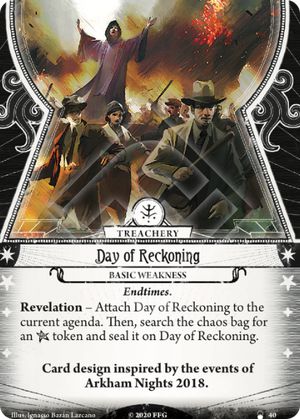
Maybe the softest weakness in the game. In True Solo, you are taking so few tests that this will likely not even cost you an elder sign you would have drawn. The only side effect is to slightly increase the probability of drawing the autofail. It also only lasts for the current agenda.
Adaptations: not needed.
Difficulty: Crippling
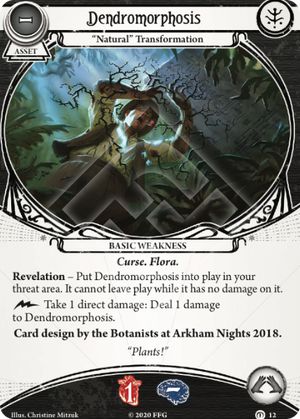
While it only cost a direct damage to discard, this has the potential of discarding two hand assets upon draw. For most investigators rely on their hand slots for their primary weapons and investigating tools. Even more in True Solo. Having your weapon discarded and drawing an enemy can be a death sentence. Brutal weakness.
Adaptations: mystics may afford to ditch hand assets completely. Guardians can mitigate it with Bandolier. Others may plan to play only one asset that takes up one/two hand slot, and have spares for it. Still, this card cost the cost of the asset, the action to play it, and a damage on top. Having a way to manage an enemy without hand slot asset is also important.
Difficulty: Crippling
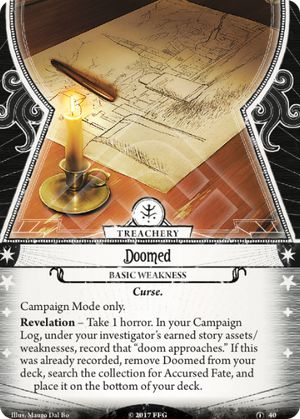
The basic effect (taking an horror) is mild, and so is the effect of Accursed Fate (2 horrors). The punishment comes after drawing the weakness a total of five times. The investigator is killed. This is likely to happen in an 8 scenario campaign.
Adaptations: mystics and seekers can try to bury the weakness in their deck with cards such as Scroll of Secrets, Scrying, etc. Some campaigns, such as Edge of the Earth or the Scarlet Keys allows to skip some scenarios, an option you might want to take if your are close to your demise. Doomed investigators can also avoid to draw.
Difficulty: Impactful
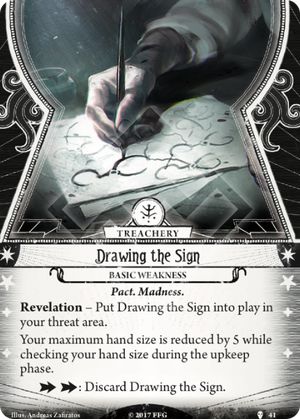
The real threat is when the card is drawn during upkeep phase, as the check for hand size will come just after and can force some discards. Having a 3 card hand size really hurt your capacity to react to a situation, so this a weakness worth paying the two actions to discard if you are not near the end of a scenario.
Adaptations: avoid hoarding to many cards before Drawing the Sign shows up. Don’t draw as a last action.
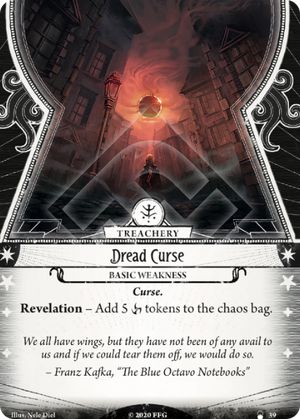
Difficulty: Easy
Curses are a mild threat. Curses do not ruin to much your chances at succeeding a test in standard. This might cause you to fail one test you would have succeeded otherwise. Seekers and Mystics can take advantage of the curses.
Adaptations: Blasphemous / False Covenant
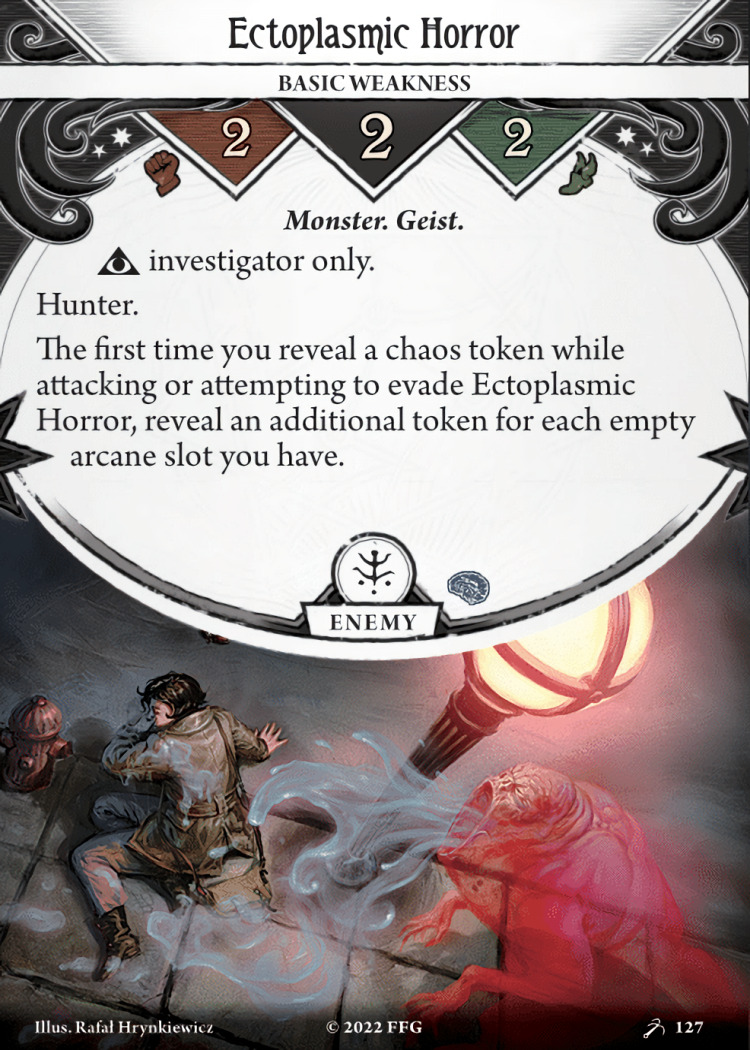
Difficulty: Average
One of the easiest weakness enemies. It can still be a threat if drawn on turn 1 with no fighting spell out. Other than that, it can be dealt with with an action and a charge.
Adaptations: fill the arcane slots early. Not that hard to do for a mystic anyway.
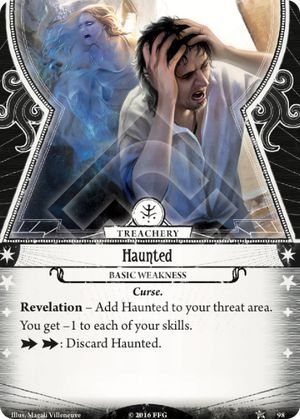
Difficulty: Average
This weakness is the perfect example of an average double action to discard weakness. You can pay the action tax, or choose to live with it for a couple turns, or even for the rest of the scenario.
Adaptations: no adaptation needed
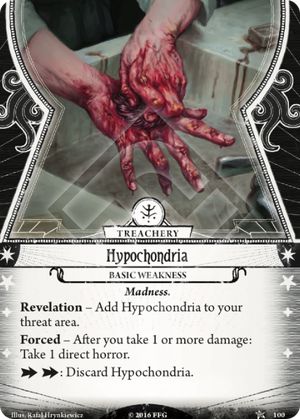
Difficulty: Average
Another weakness that is easy to live with for a couple turns. Whether you want to pay the cost discard it or not is a choice you have to make based on the game state.
Adaptations: no adaptation needed. Having a bit of extra horror soak can allow to save your investigator sanity for this and avoid having to discard it.
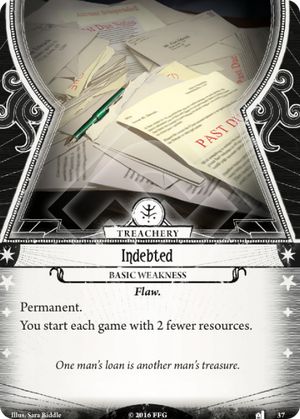
Difficulty: Impactful
2 fewer resources is a mild tax for a weakness, but as a permanent this will always trigger, and does so right when you need resources the most. Set-up is even more critical in Solo, as you have to be ready to deal with an enemy in the following mythos phase.
Adaptations: go for cheaper assets if you can. Rogues can spend 3XP to nullify the weakness with Another Day, Another Dollard. Upgrade into better economy cards.
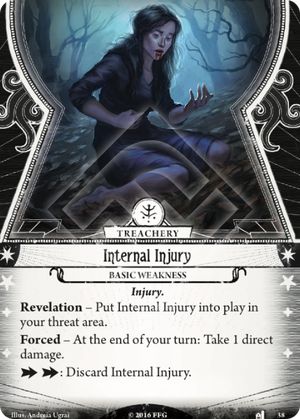
Difficulty: Average
This is a weakness you usually want to discard. However, if it is drawn during the Upkeep phase, you have a chance to ditch it on your next turn before taking any damage. You might be able to ignore it for a couple turns to finish off an enemy, or to wrap up the scenario.
Adaptations: avoid drawing as a last action. Having a bit more health soak or good healing can allow you to ignore it for longer.
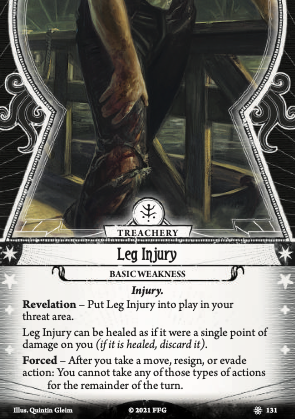
Difficulty: Average
Not being able to move more than once per round is a bit more impactful in Solo, as movement is a key part of True Solo play. Evading more than once per round is rare in True Solo. Overall, this is a relatively soft weakness, that can still be hurtful in a couple scenarios where quick movement is essential.
Adaptations: either pack some healing cards, or good movement compression cards (Shortcut, Nimble, Scout Ahead, etc)
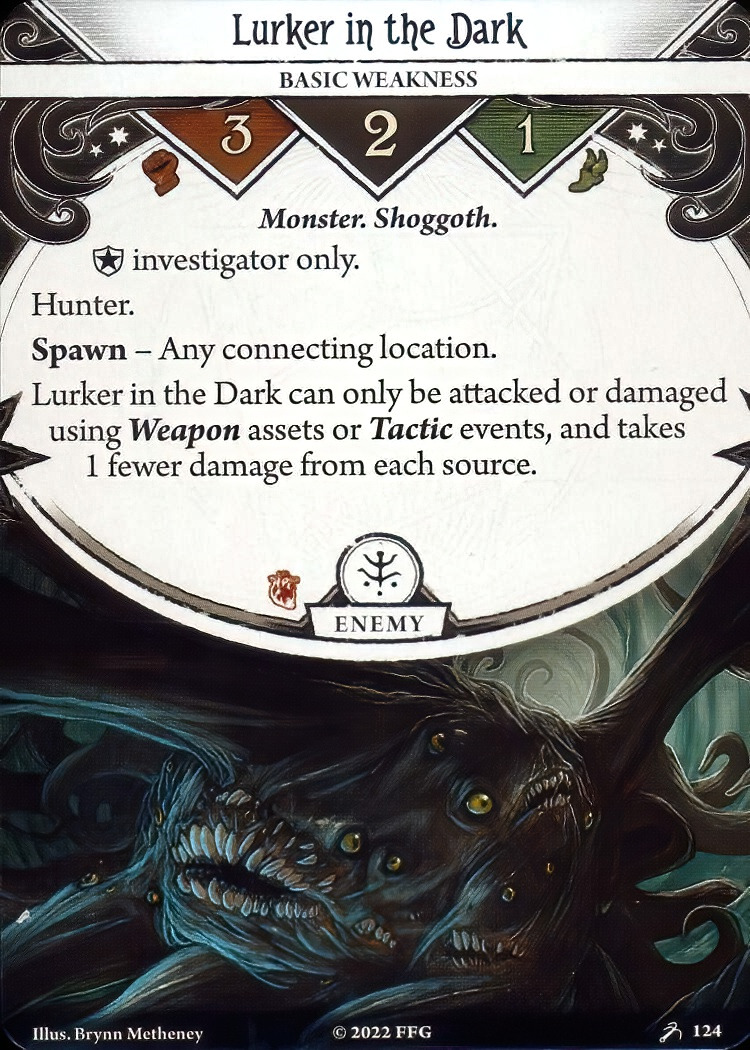
Difficulty: Impactful
This enemy piles up some annoying characteristics. Because it spawns in a connecting location, if you don’t move, it will attack you. You can either run from it or move onto it. Moreover, the damage reduction forces you to either fight twice, or use a big gun/event.
Adaptations: avoid guns or events that only deal 2 damages. Favor melee weapons or 3 damage attacks. Evading is also an option on some maps.
Difficulty: Impactful
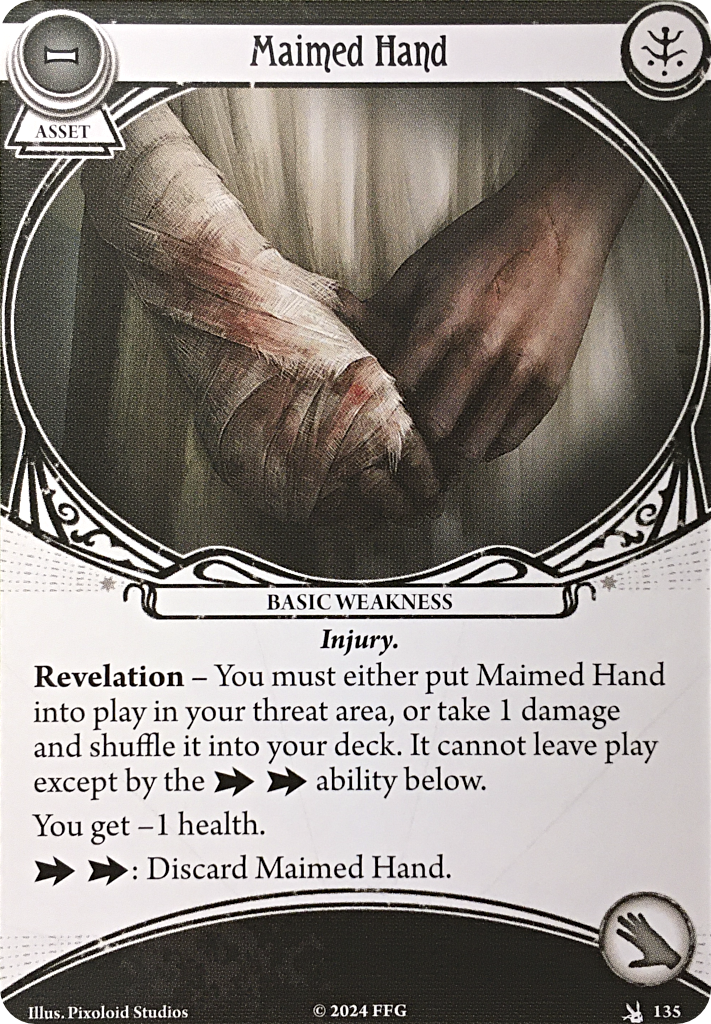
Not as crippling as Dendromorphosis, but still annoying as it target one of the most useful slots. Having the option to reshuffle it in the deck for 1 damage allows to keep an important asset if you need it. This will however eat up your health and draws over time.
Adaptations: avoid two-handed assets. Bandolier or Tool Belt can avoid discarding a hand asset.
Difficulty: Impactful
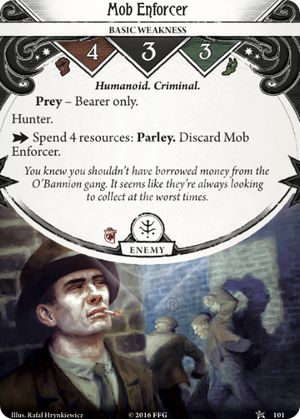
With 4 combat and 3 health, it is not an easy enemy, that would take either two actions or a big event to defeat for most investigators. The best way to get rid of him is sometimes to pay up. Still, an action and four resources is a hefty cost.
Adaptations: either plan to deal three damage in one attack, or have a bit more economy to hoard 3/4 resources before upkeep/drawing a card.
Difficulty: Average
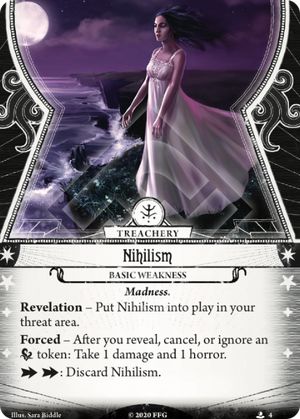
This card baits you into ignoring it, and it is statistically the best play. Most investigators will only take 15-30 tests in a scenario (sometimes less), so even if drawn early this is on average 1-2 autofail draws. If you are unlucky and draw the autofail on repeat, it will kill you faster. But you were probably loosing the scenario anyway.
Adaptations: avoid effects that reveal extra tokens. Having a bit more soak can give a player a safety net.
Difficulty: Impactful
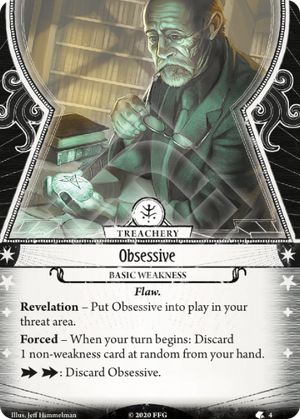
Because it triggers when your turn begins, this will usually cause you to at least discard one card at random, which is already impactful. If you cannot discard it quickly, this becomes a crippling weakness that will empty your hand.
Adaptations: if you are not engaged with an enemy, using your first action to draw (either directly or via card effect) is a good idea. Having ways to get extra actions is also helpful to guarantee being able to discard the weakness quickly.
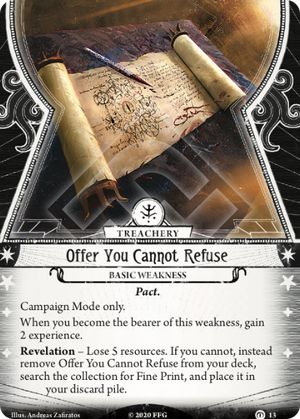
Difficulty: Impactful
This is Indebted, for gamblers. If you want to guaranty safe draws, this locks in 5 resources (an makes you start with an effective 0 resources). If you don’t, you are taking chances. The fact that it grants two XP that you can spend immediately is the only things that prevent it from being crippling.
Adaptations: use the XP to get good economy cards or a cheaper set-up. Do not draw with less than 5 resources. For mystics, this i a good target for Deny Existence / Deny Existence(5).
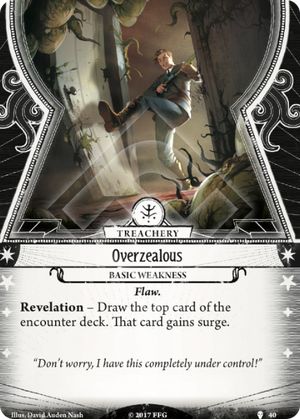
Difficulty: Impactful
One of the most severe weaknesses for sure. Sometimes, it will bury you beneath three enemies once the mythos phase is over. Most of the time, this will still hurt you quite a lot.
Adaptations: dealing with the encounter deck is something a Solo deck should be able to do anyway. Having extra encounter protection/enemy management helps to survive the tempo spike when it shows up. Do not draw if it is not your first action.
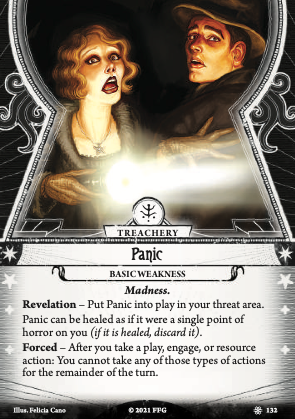
Difficulty: Easy
Outside set-up, not being able to play, take a resource or engage more than once a round is not a big deal. This weakness is quite manageable.
Adaptations: no adaptation required. Take a bit of horror healing if you play a lot of events.
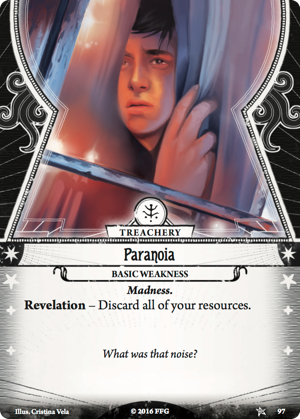
Difficulty: Easy
While uncapped, the effect of Paranoia is usually quite soft. Most of your starting resources should be spent in your first turn. On average, this will likely not cause the loss of more than 2-3 resources, which is a soft price for a weakness.
Adaptations: avoid playing a big money deck or many costly events. Do not play a big resource generation card without spending them on the same turn.
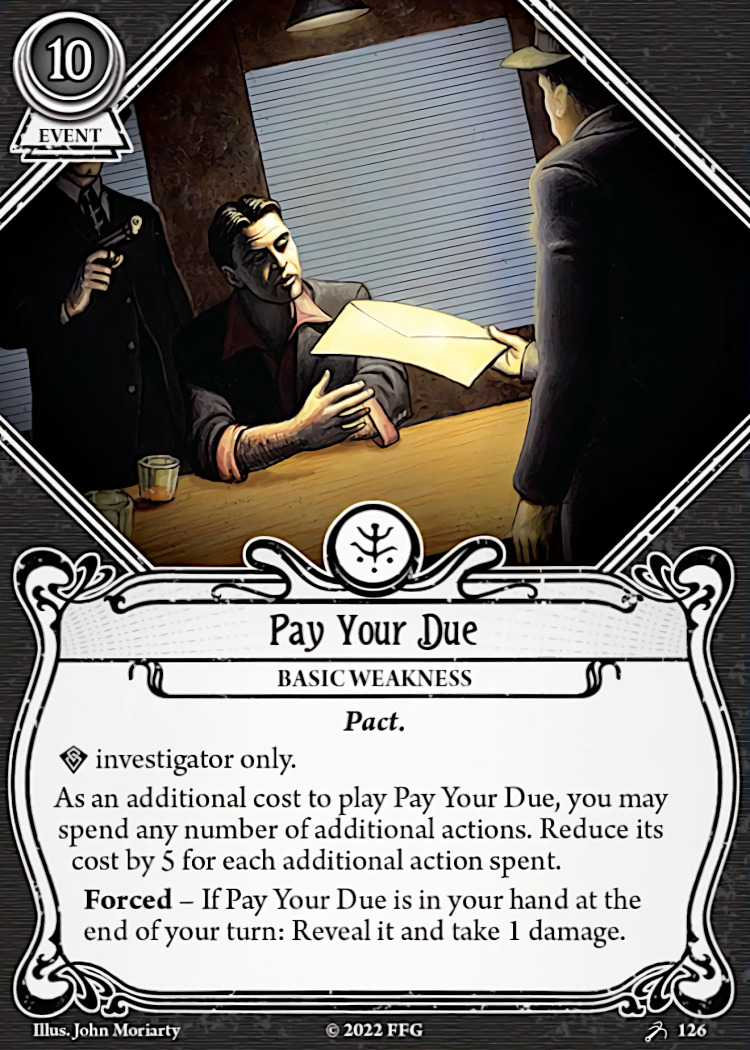
Difficulty: Impactful
This is internal injury, but it cost 5 resources or one action more to discard. The damage dealt is no direct, but the extra cost makes it harder to find a round to get rid of and thus more likely to deal damage. If it is drawn on the second half of a scenario, it might be better to ignore it.
Adaptations: do not draw as a last action. Have cards that grants extra actions / resource generations. Having health soak can allow to ignore the weakness a couple extra turns.
Difficulty: Average
The reverse of Hypochondria. This is a weakness that you can usually ignore a couple turns before getting rid of, or even keep in play near the end of a scenario.
Adaptations: no adaptation required. Having a bit of health soak can give a bit more room to ignore the weakness for a bit.
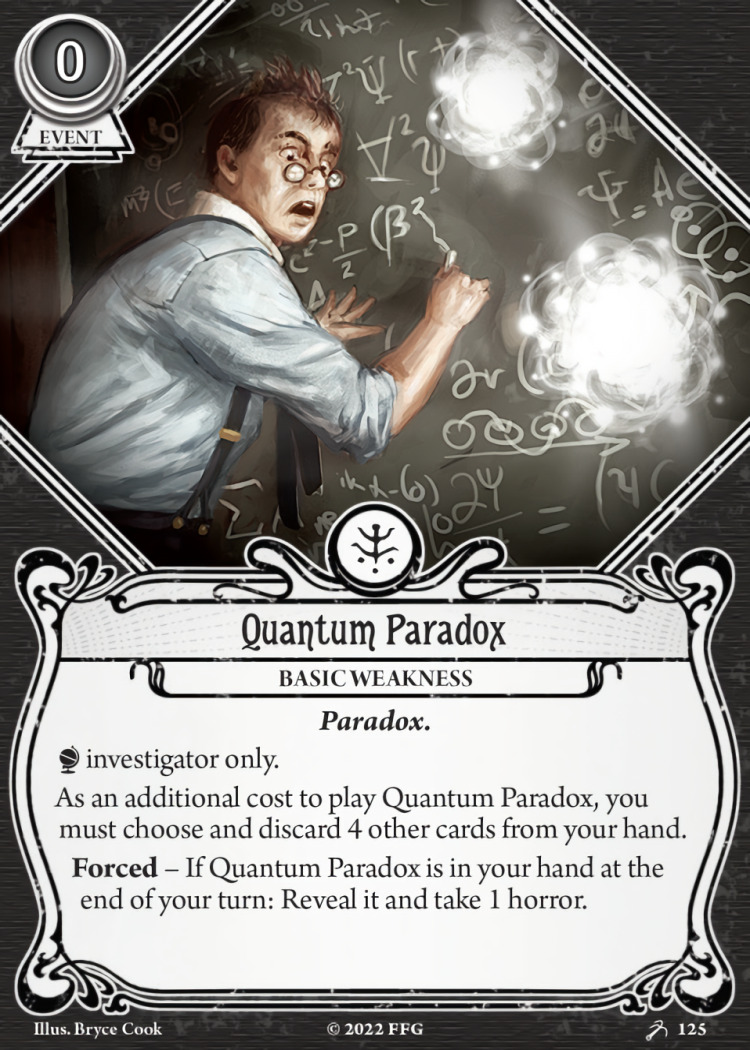
Difficulty: Impactful
Even for seekers, paying one action and discard four cards is a hefty cost. It encourages more card draw, which makes it even more likely to come early in a scenario. This makes soaking the horror more challenging, and getting rid of it more enticing.
Adaptations: saving some card draw can help refill the hand after playing the weakness. Soaking the horror is an option, and cards such as Ancient Stone (Minds in Harmony) make it easier to ignore.
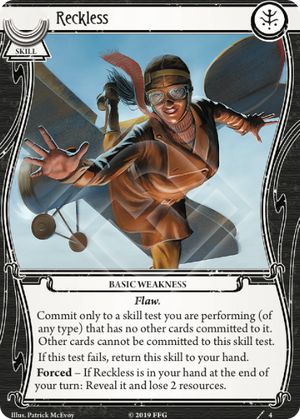
Difficulty: Easy
Passing a skill test with no other card committed is not a hard challenge on its own. The penalty for having Reckless at the end of the turn is also not that big, and you can even spend the resources before it triggers.
Adaptations: no adaptation required. If you want to cheese Reckless, some player card, such as Research Notes, allows to trigger a test of low difficulty.
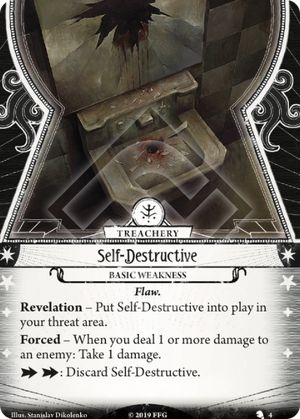
Difficulty: Impactful
As a Solo investigator, you will have to deal damage to enemies. Self-Destructive is therefore a weakness you usually want to discard. But if you draw enemies right after Self-Destructive, you will take a some damage before being able to do it.
Adaptations: the best adaptation is to be able to one-shot an enemy, or to have a bit of extra health soak.
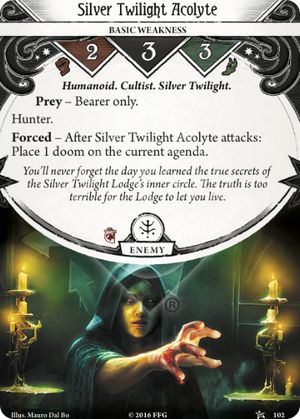
Difficulty: Impactful
The main difficulty of this enemy is that it is a priority target most of the time, as loosing a round out of an attack is very consequential. If engaged with another enemy, having to deal with the Acolyte first can lead to take an attack. Fortunately, the 2 combat value of the Acolyte makes it easier to hit.
Adaptations: have a way to deal 3 damages in an attack, or have a source for a fast extra damage.
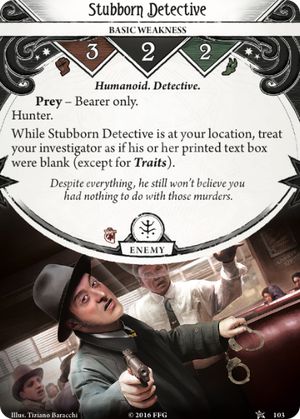
Difficulty: Average
Loosing your investigator trait is not a big deal for most investigators, and this enemy is easy to dispose of in one action. A few investigators (such as Calvin, Charlie, or Amanda) might need a specific plan to deal with it.
Adaptations: usually a weapon attack will be enough. For the aforementioned investigators, cards that deal guaranteed damages (Toe-to-Toe, Blood-Rite) can help to get rid of the detective.
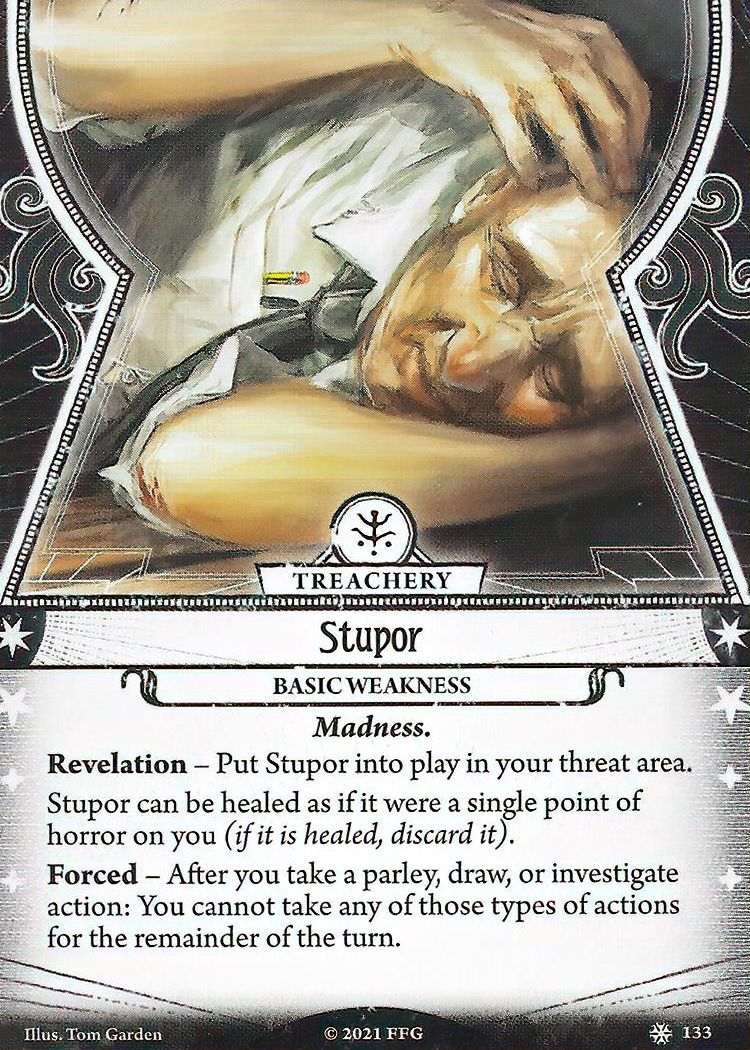
Difficulty: Easy
The main restriction on this card is the limitation to one investigation per turn. However, in Solo, a lot of locations only have one clue, so this restriction is not as bad as for a cluever in multiplayer. Not being able to draw if you investigated is also sometimes relevant on your off turns. For the most part, you can live with this weakness, though.
Adaptations: no adaptation is required, but having some horror heal can get rid of the weakness, or you can bypass the effect by having cards like Deduction to handle locations with multiple clues.
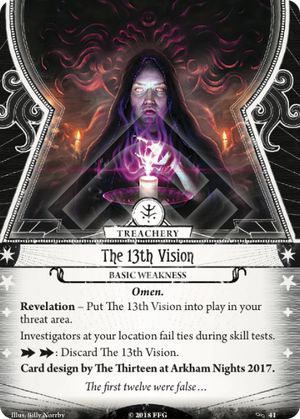
Difficulty: Average
This is almost a carbon copy of haunted, except that it can cause you to fail 0 difficulty tests. This card is mild enough to live with near the end of a scenario, or be discarded on an off-turn.
Adaptations: no adaptation is required. Steady-Handed(1) negates the effect of this weakness.
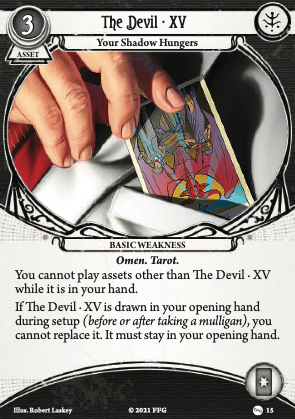
Difficulty: Crippling
Drawn in the middle of a scenario, The Devil is already an annoying card. It requires an action and three resources to play. Drawn during set-up, the effect is devastating: you effectively start the game with one less action, one less card, and three less resources. It also cannot be mulliganed, so if you draw it in the first hand, it also reduces the chances to hit your important assets. If it is not in your first hand, it adds risk to the mulligan.
Adaptations: having weapons that cost three or less resources can mitigate the effect of drawing The Devil, as you can play them after a resource action and have a weapon out for the first mythos phase.
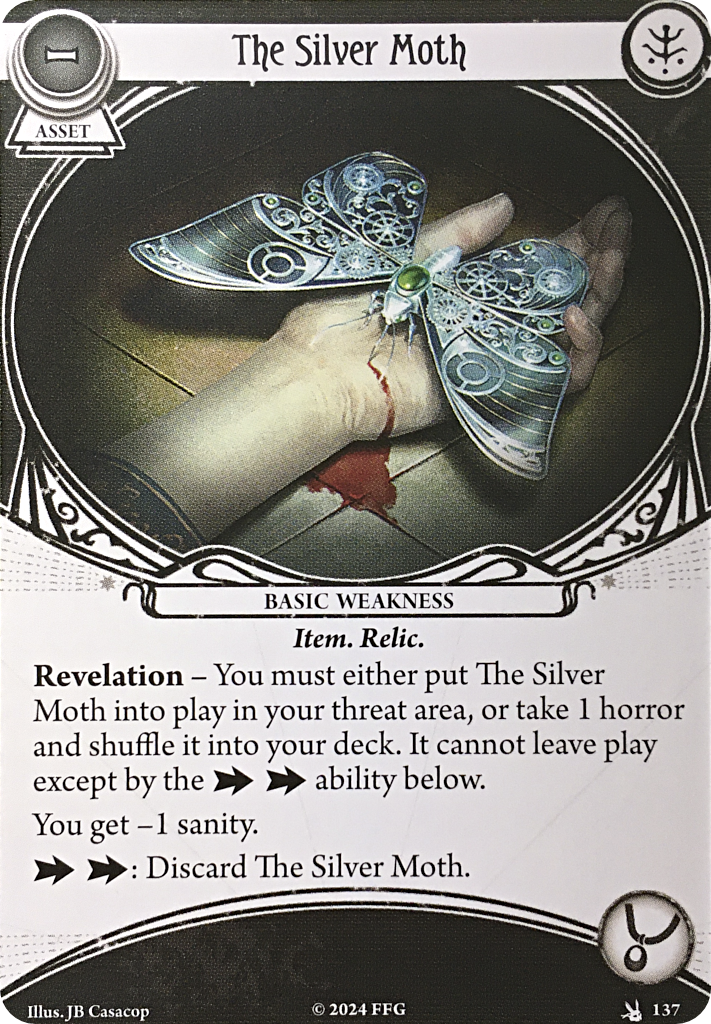
Difficulty: Average
The accessory slot is quite useful, and can store potent assets you do not want to discard.
Adaptations: if you are planning to use a key accessory, you can nullify the effect of The Silver Moth with Relic Hunter.
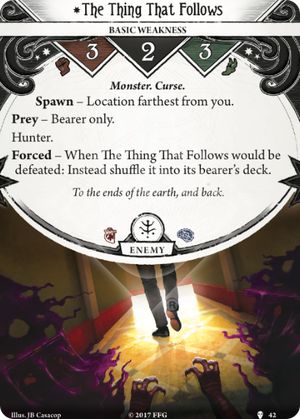
Difficulty: Average
Because this enemy does not spawn in your location, it gives you a chance to prepare. And because it spawns in the furthest location, you might not even have to fight it. Still, drawn early on tight maps, this enemy can eat up multiples actions and draws in a scenario.
Adaptations: can be dealt with with any weapon, but cards such as Handcuffs or Existential Riddle(1) can be used to avoid having to reshuffle it in your deck.
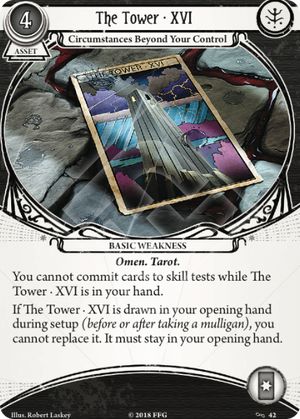
Difficulty: Impactful
The Tower is not nearly as bad as The Devil. Drawing this during set-up is still bad, but it does let you get your assets out before you deal with it. Still, paying four resource and one action to get rid of it is a large expense.
Adaptations: avoid using too many skills, or add enough economy to pay the cost of the card.
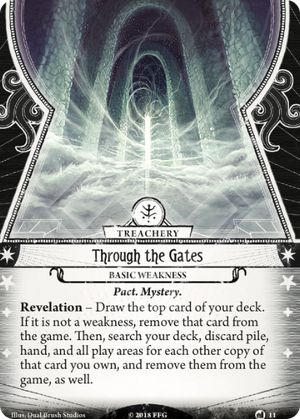
Difficulty: Average
95 % of the time, this card will just be a dead draw. The worst scenario is when this removes your primary assets (weapons), which can be devastating.
Adaptations: have redundant assets with different names. Try to get important assets out of the deck before hitting the weakness with cards such as Backpack (though two backpacks are a recipe for disaster).
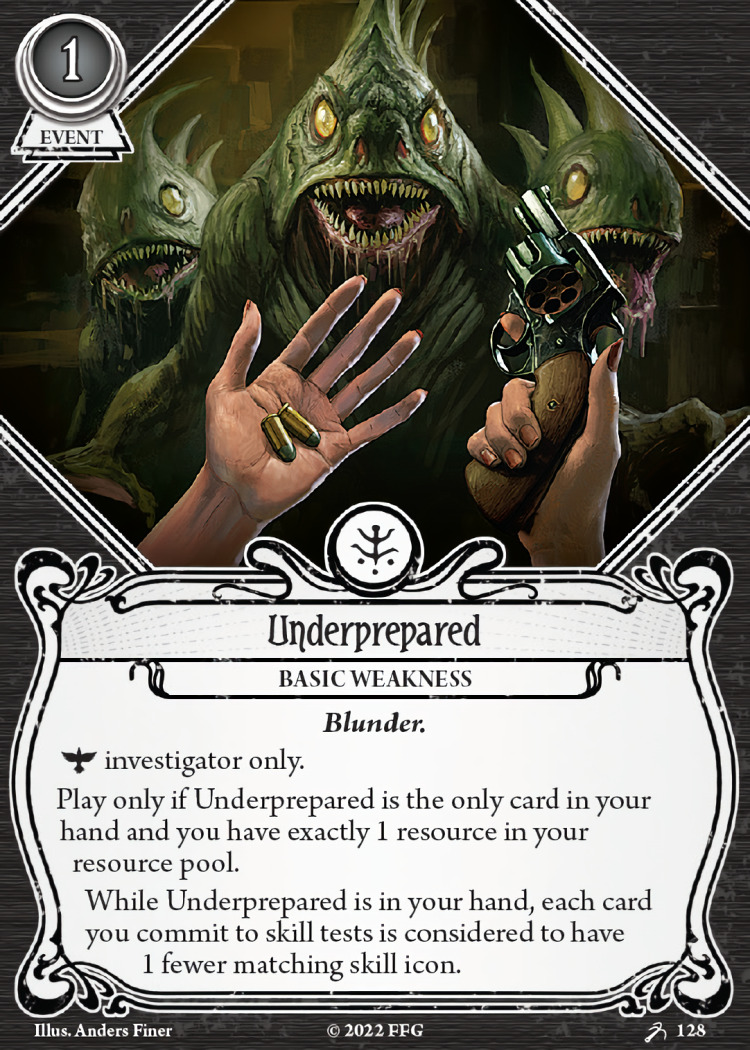
Difficulty: Impactful
This weakness is mostly bad because of how difficult it is to get rid off it. An investigator has to dump all its hand and resources to play it. The effect is noticeable, as it removes any value from copies of assets you have in hand, and greatly reduces the value of your skills.
Adaptations: this weakness becomes more tolerable if you are playing a Dark Horse deck, because it removes half the cost to play it. Investigators with discard synergies (Ashcan, Wendy, Patrice) can mitigate the cost of dumping their hand. Another fix is to use Katja Eastbank or Hunting Jacket to store Nothing Left to Loose and play it after the weakness. Most investigators will just keep the weakness though.
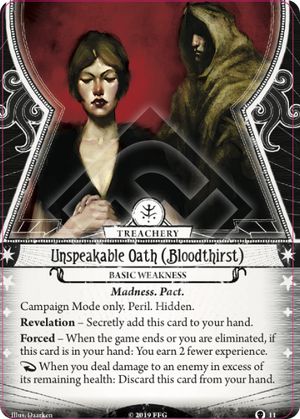
Difficulty: Easy
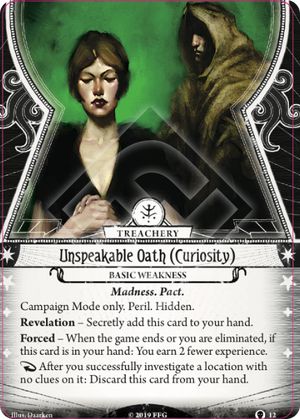
This weakness does nothing during a scenario. Avoiding the XP loss is easy as well, the worst it can cost you is an extra fight action. The only time it can sting is if drawn just before the end of a scenario.
Adaptations: no adaptation required. Melee weapons makes it easier to satisfy the condition without using anything else.
Difficulty: Easy
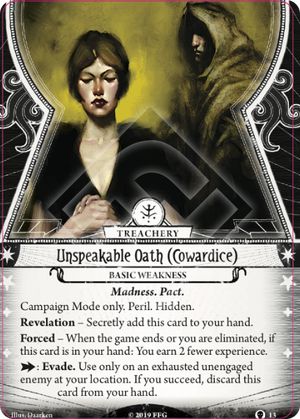
This weakness does nothing during a scenario. Avoiding the XP loss is quite easy as well, as this can be done on a location with low shroud. It can become a bit more annoying if drawn late in a scenario.
Adaptations: no adaptation required.
Difficulty: Average
This weakness does nothing during a scenario. Avoiding the XP loss is a bit more challenging, as this one requires to exhaust an enemy twice. And evading is not something all investigators already want to do.
Adaptations: if your investigator is struggling to evade, Flashlight(3) is a decent upgrade of an already useful card in True Solo. Otherwise, many event & skills can enable evading for a low agility investigator.
Difficulty: Easy/Average
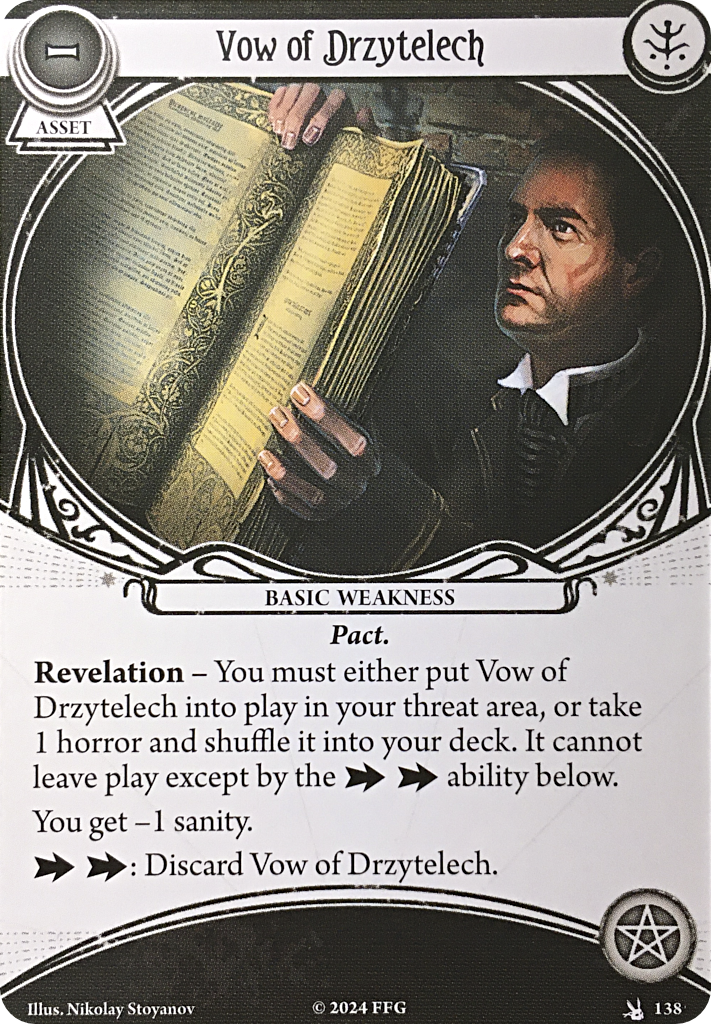
This weakness has very low impact if you are not playing a mystic. Mystics can either leverage their high sanity and reshuffle it into the deck, or have it target a close to depleted spell.
Adaptations: non-mystic can easily get by with only one arcane slot. Mystics have a lot of ways to generate extra arcane slots, the better ones being Occult Reliquary if you are using cursed spells, and Sign Magic(3) otherwise.
Final thought on basic weaknesses: the fun police
Ultimately, most of the basic weaknesses will not cripple your True Solo runs. However, some of them will definitely have a much greater impact on your campaign than others.
My personal opinion is that the rule that enforce the weakness to be the last card added to the deck is a bit clunky. Weaknesses are a great way to add to the variety of the game and introduce new deckbuilding challenges. However, the current rule limit your adaptation to upgrades, and the weaknesses are often not impactful enough to favor weakness adaptations over the most valuable upgrades for your deck. I would have enjoyed a more harsh set of weakness, but with the option to build my deck around them.
Finally, there is the question on what to do if you draw a weakness that really cripples your build. To me, this is a matter of personal preference. The bravest and more masochist investigators will carry on. For the others, we enter in the realm of house rules. My personal favorites are the following:
- Draw two weaknesses, chose one
- Swap your weakness for Overzealous
In the end, and in True Solo in particular, your enjoyment of playing the game is what matters most. And your basic weakness should contribute to this enjoyment, even in the punishing, twisted way we love Arkham Horror LCG for.