Introduction
In the “5 cool cards to…” posts series, I look at the card pool for the most interesting cards to assist in rounding up a deck that might struggle with some of the challenges required to perform well in true solo.
To keep the posts to a reasonable size, I select cards with the following rules:
- 5 cards maximum per class
- Level 0-2 cards (to maximize the investigators that can access them, and facilitate the use in starting decks)
- Variety of archetypes (to avoid shoehorning players into one deck type)
- Suited for true solo (some cards have amazing value in 2+ players, but are less interesting playing solo).
How to tame treacheries from the encounter deck
Most of a player’s deck should be dedicated to advancing the game (finding clues, defeating bosses, revealing the map). This leaves treacheries mitigation in a uncomfortable spot.
On the one hand, treacheries can ruin a scenario (and this is especially true in True Solo), by either defeating you through damage and horror or leaving you helpless in front of an impossible hurdle. On the other hand, you cannot win in Arkham just by not loosing.
Whether your should even consider including treacheries mitigation cards in a deck depends on the scenario played, your investigator statline and its health/sanity balance. Having a good understanding of these three elements helps to identify what’s the most likely to ruin your gameplan and what could be the best fix for it.
Generally speaking, most treacheries will interact with defensive skills (willpower and agility), and will either contribute to defeat you with damage/horror, or slow you down by taking away actions, cards, resources or play options.
To mitigate the effect of treacheries, you can either:
- Raise the defensive skills to reliably pass the test on treacheries
- Include soak and heal cards
- Have “counter” cards that either mitigate, nullify, change or remove the effect of treacheries.
In this post, we look at cards that are good at achieving at least one of these purposes. Which one to go for is a choice for you to make, by considering both your weak spots and how well your card otherwise synergize with your deck.
Neutral cards
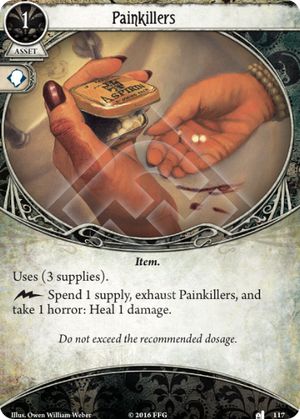
Painkiller / Archetype: None
Painkiller, and its sibling Smoking Pipe are great cards to fix an imbalance in your soak, or in the scenario damage/horror dealing.
In the right setting, these cards are a heal 3 for 1 resource, one card and one action. Not too bad.
The best candidates are 9/5 or 5/9 investigators, or investigators with a deck that has a lot of soak in one stat but not in the other (decks running Pete Sylvestre or Jessica Hyde are a good example).
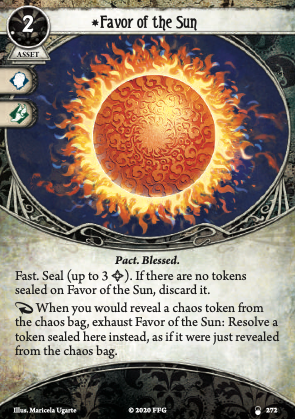
Favor of the Sun / Archetype: Bless
If you are running blesses, Favor of the Sun allows three on-demand +2 boosts in any skill test. This means it will help you on multiple treacheries should you need it, even if they target different skills.
While you need to first put bless token in the bag before your can use it, bless generation has become much easier since the Hemlock Vale expansion.
Guardian Cards
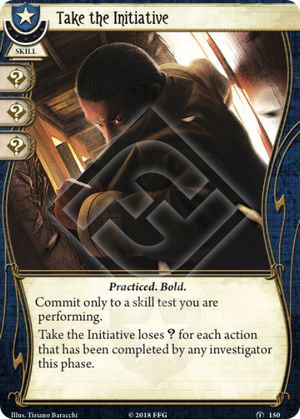
Take the Initiative / Archetype: None – Practice Makes Perfect
This card gives 3 wild icons for test in the mythos phase, which makes for 90% of the tests you will be doing because of treacheries.
While it falls short dealing with a few notable treacheries (it is worthless to get rid of a Frozen in Fear, for example), it is versatile and shine in True Solo as it can be used to pass a difficult scenario test on your first action.
It is also a great include for decks running Practice Makes Perfect.
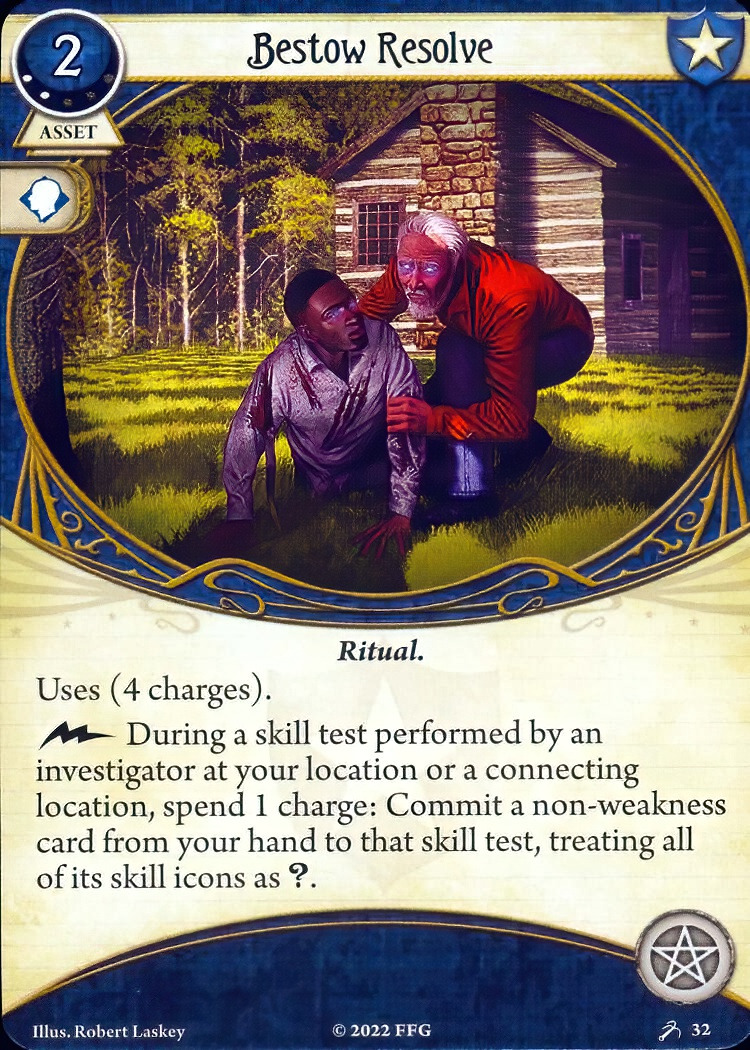
Bestow Resolve / Archetype: Skill card matters
You liked the wilds icon of Take the Initiative, but you wish you got more out of it than just passing the test on your treachery?
Bestow resolve will transform a lot of very good skills into a plethora of icons. The best targets are Inspiring Presence, Eureka, Watch This! and Resourceful. The double events from the Hemlock Vale expansion also have 3 icons at level 0, should you need it. Even the base skills such as Overpower can now be upgraded to offer both 3 wilds and potential card draw.
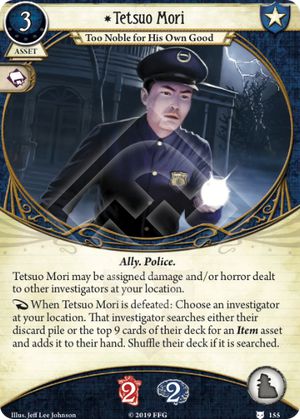
Tetsuo Mori / Archetype: Meat Army
Tetsuo soaks for 2/2. Tetsuo dies. Tetsuo reward you by giving you an object as a memento.
Value wise, it’s one of the best soak card available to Guardians at level 0. The fact that it uses the ally slot can be somewhat of an issue, though. I tend to prefer allies that contribute to advance the game.
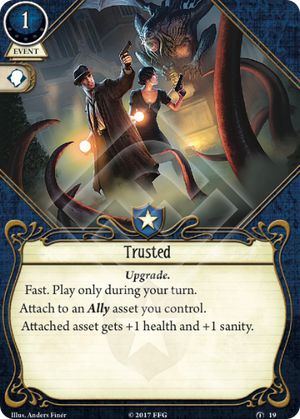
Trusted / Archetype: Meat Army
You want to use your allies to soak but actually care about them surviving? You just want more soak at a great price?
Trusted is a fast 1/1 soak for a resource and a card. At level 0, the value is hard to match. Yes, it does need an allied to be played before, but allies are among the highest priority assets anyway.
It is one of my go-to cards if I want to round up a deck with a bit of extra soak, without having to think to much.
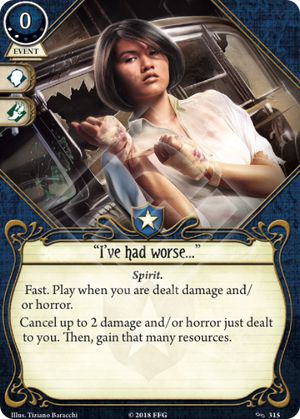
“I’ve had worse” / Archetype: None
This card is what I would upgrade Trusted for if I ever upgrade it. It has almost the same effect, with no restrictions and effectively save 3 resource for your economy (cost 1 less and gives you 2).
While it is nice and of good value, this upgrade is worth it only if you are a bit lacking in economy, or if you need more of a given type of soak.
Guardians are well equipped when it comes to facing the mythos. They have a solid mix of cancels / heals /soaks and skill boost to adapt to the treacheries that hurt them the most.
In Solo, the main difficulty that guardians will encounter is probably the few available deck slots for Mythos protection. They will have to dedicate a fair amount of cards to fight but also to find clues, which can be a struggle for them.
I would favor cards that either are critical to fix the weakness of an investigator (Rolland Banks low sanity issue, for example), or use cards that can serve another purpose (such as Take the Initiative).
Honorable mentions: Obsidian Bracelet, Hunter’s Armor, True Grit, Something Worth Fighting For, Hallowed Mirror
Seeker Cards
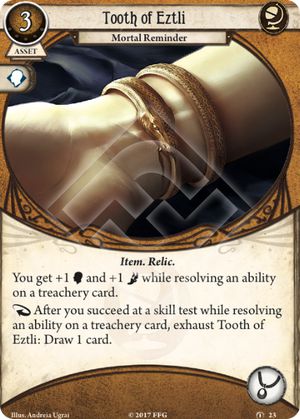
Tooth of Eztli / Archetype: None
This card is pure treachery defense. It boosts the two most tested stats on treacheries, and reward succeeding at those.
For this card to be worth it, you need a decent base willpower and/or agility to start with. Rex, Mandy and Ursula have statlines that make them good users of this card.
It is of course best for campaigns with a lot of tests on treacheries.
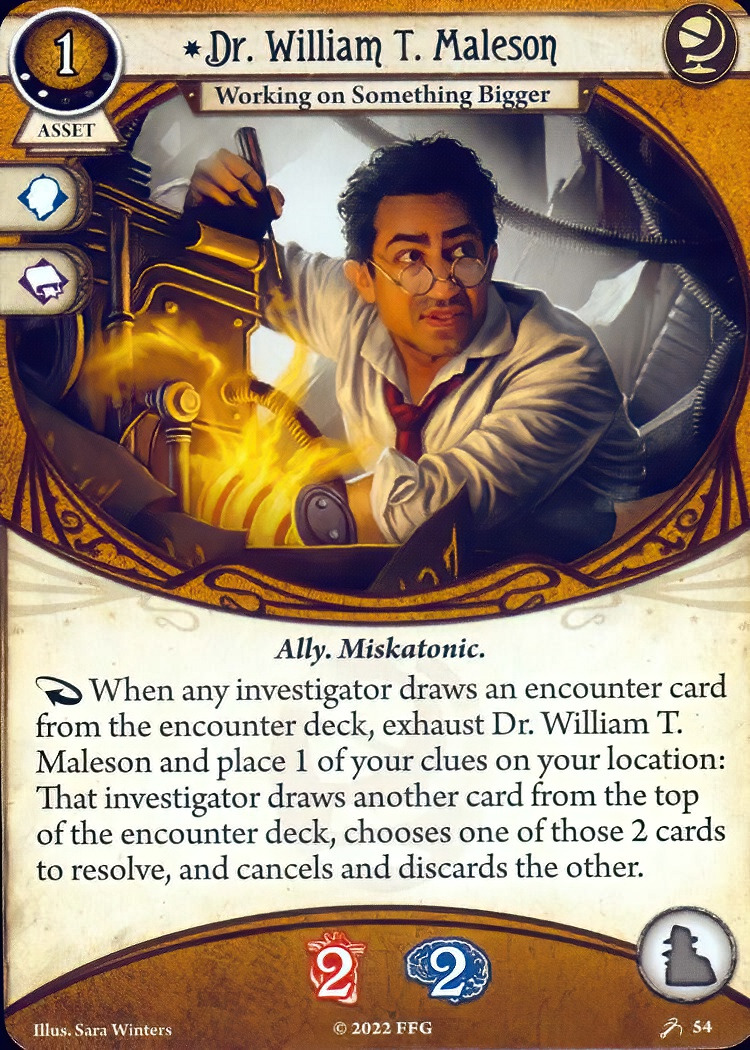
Dr. William T. Maleson / Archetype: Clue Dropping
At level 0, our dear Dr. Maleson is already a very good card, as 1 resource and a card for a 2/2 soak is as cheap as you can get at level 0.
I chose to select the level 2 version because while the ability on the level 0 version can be useful for the worst treacheries in the game, the level 2 gives a much greater control on what you draw from the encounter deck.
Dropping a clue is a hefty price to pay, which you have to build around (or use the level 0 version as a cheap soak with a panic button).
There are however lots of ways to create synergies around dropping clues. You can pick them back easily with Research Notes, generate extra moves out of Hiking Boots, etc. And being able to discard enemies while feeding treacheries to your Tooth of Eztli is great fun.
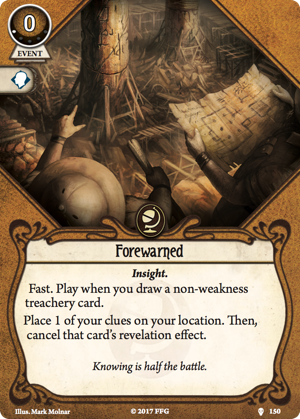
Forewarned / Archetype: Clue Dropping – Tech
This is the Seeker version of Ward of Protection. It does cost an XP and requires to drop a clue.
Unlike Maleson level 2, who is made to build around and use repetitively, this card is usually included as a Tech card with a few specific targets in mind. Of course, it hurts when you draw the treachery when you have no clues on you.
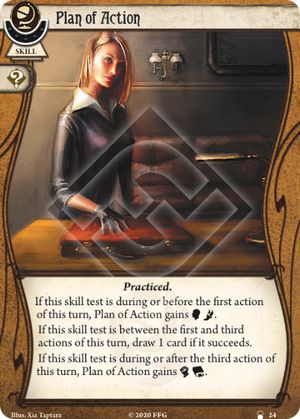
Plan of Action / Archetype: Practice Makes Perfect
Plan of Action had recently received a clarification that indicate that it indeed gives two willpower or agility in the Mythos phase, which is why it appears on this list.
Yes, it is only worth a +2 for mythos defense, but it can also be used as a cantrip for a +1 / draw on your second action.
The main perk is that is combines very nicely with Practice Makes Perfect, as the wild icon ensures it is always a valid target.
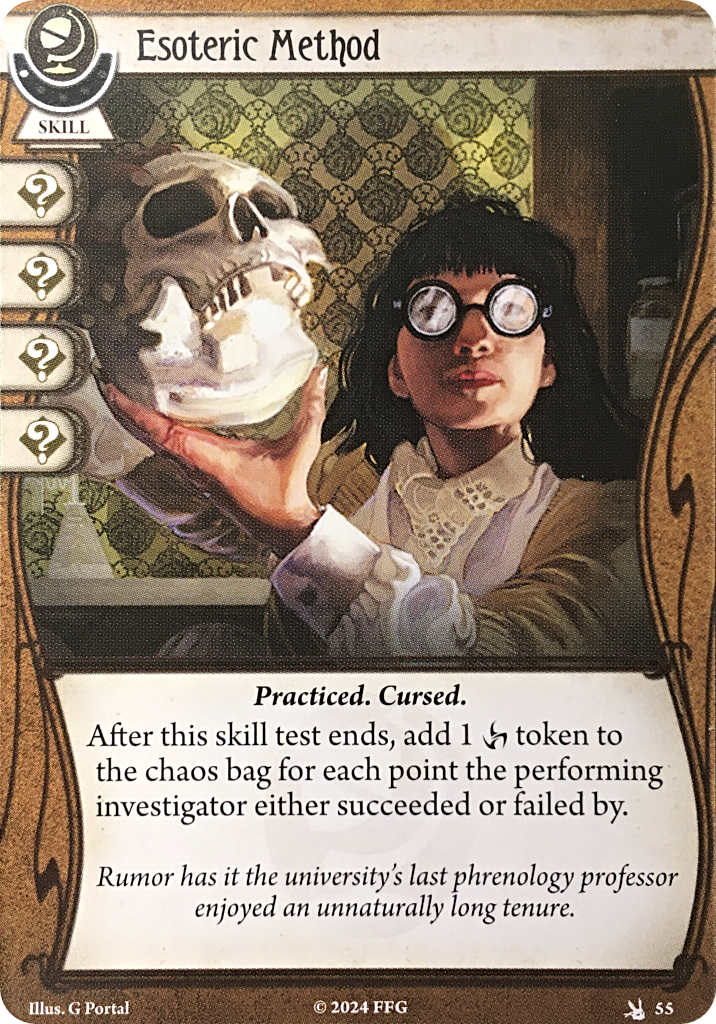
Esoteric Method / Archetype: Cursed – Practice Makes perfect
For once, Seekers don’t have the best card at doing something, as Promise of Power is better, unless your goal is to load the bag with curses.
That being said, curses + Blasphemous Covenant works great in True Solo, and 4 wilds icons will ensure you can pass an important treachery test. For Seekers/Mystic investigators, Practice Makes perfect + Promise of Power and Esoteric Method goes a long way.
The main tools for Seekers to deal with treacheries are mostly good skill cards or card that drop clues.
Clue dropping is the most committing of the two solutions, as a large amount of deckslots will be dedicated to support it.
Honorable mentions: Quick Study, Bizarre Diagnosis, Logical Reasoning, Inquiring Mind, Medical student
Rogue Cards
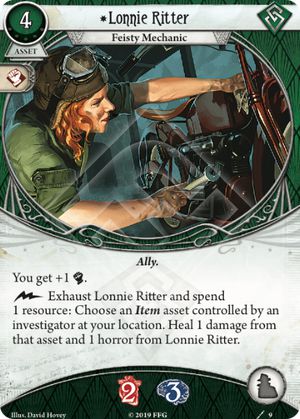
Lonnie Ritter / Archetype: Tech – Chuck Fergus
Lonnie is a great value card on it’s own, and a lot of Guardians would love to include her in level 0 decks.
While the +1 fight is -very- relevant, Lonnie made the list because her ability makes her one of the best level 0 soaks in the game. Trading 1 resource for a 1/1 heal without an action is amazing value.
The only downside is that you need to play an Item with 2 health to enable this ability. This puts a constraint in your deckbuilding, and it can sometimes feel overkill (Tony Morgan needs the horror soak but not more health, for example).
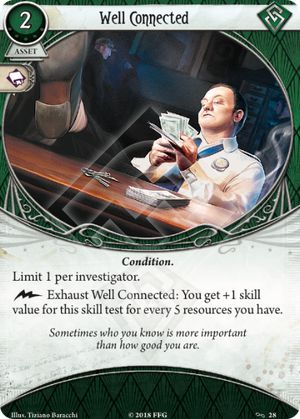
Well Connected / Archetype: Big Money
Well Connected is worthless unless you are playing the hoarding resource archetype.
In this archetype, though, it is quite good at boosting the tested skill in the Mythos phase. Unfortunately, that also means you cannot use it to do anything else this round.
As a limit 1 per investigator, it cannot be your only plan should you need treachery protection, but as it will for sure be in the deck if you play the archetype, it will contribute to keep you safe.
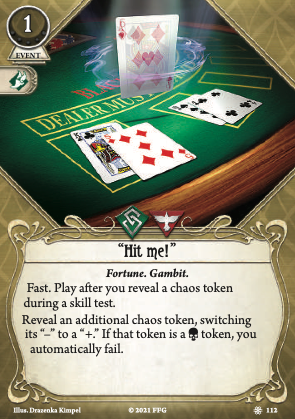
“Hit me”/ Archetype: Over-succeed
While Survivors probably don’t care about this card, “Hit me” is a quite versatile card for Rogues.
It’s primary role is a safety net to pass risky test, just as a Lucky! Compared to it, it is of course less reliable, but has redeeming perks.
First, it scales wonderfully with campaign progression. Assuming you only play it when the test would be failed anyway, at the start of a campaign, it would blank about one third of the time (skulls + autofail + 0s), and be a +1/2 most of the time. By the end of the campaign, though, worse tokens are added to the bag. This both reduces the chances of the card being useless, and increase the potential gain.
The second advantage is that it can help to trigger all the succeed by X triggers that rogues care about.
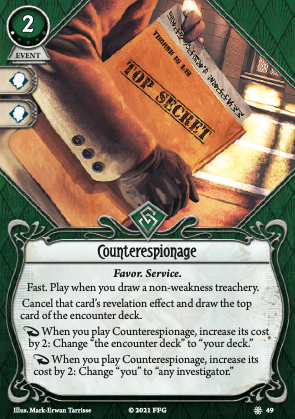
Counterespionage / Archetype: Pay to win
This card is fairly straighforward, as it allows to get rid of an unfavorable encounter draw for another, which is useful to dodge a bad timed Crypt Chill or a Frozen in Fear.
Value wise, paying an extra two resources to draw from your deck instead of getting another encounter card is worth it, as an encounter card usually take more than 2 resources worth out of the player, and the extra draw is worth 1.5R.
If you fall short on cash, the card can be committed for two brain, which is nice on its own and very nice with the Crystallizer of Dreams.
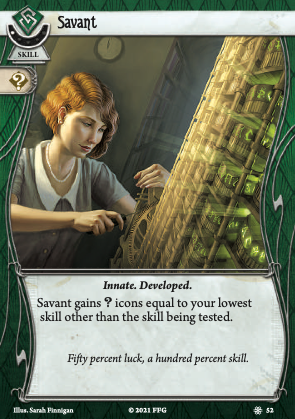
Savant / Archetype: None
Savant is a silver bullet to pass a Willpower test for most Rogues. Most of the rogues will have a modified stat of 5+ once Savant is committed to the test.
For the other skills, it will at worst be an Unexpected Courage. It is of course completely useless for Preston, and has nice interactions with cards such as Geas or The Black Fan.
In the end, this will help you pass a treachery test, and that’s all we could ask for.
Early rogues being notably low on willpower, they were for a long time the most vulnerable to treacheries.
Lately, rogues with higher willpower came out, and the latest campaign do a better job at testing a balanced mix of willpower and agility.
To defend against treacheries, they have different options. They can either use good soak such as Lonnie Ritter, use talents to boost their stats, or keep a few silver bullets for the nastiest treacheries.
Honorable mentions: Liquid Courage, High Roller, Moxie, Money Talks, Tennessee Sour Mash
Mystic Cards
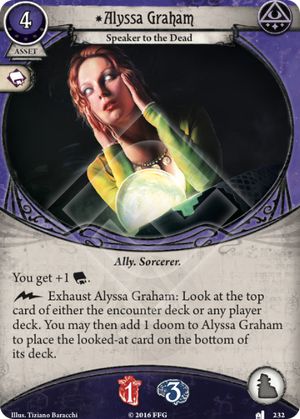
Alyssa Graham / Archetype: Doom
Alyssa’s peek ability is very nice in True Solo, as it gives you a one round lead on what the encounter deck is about to do to you. If the intellect boost is useful to you, she might already be worth considering.
The doom ability is probably hard to profit from if not without doom support. If you have Sin-Eater, though, you can eat the doom for an action, and that makes it much easier to trigger.
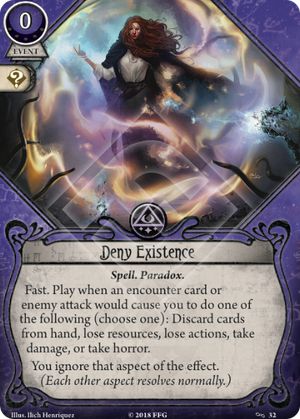
Deny Existence / Archetype: None
Mystics have a reputation of being Mythos immune, and Deny Existence is one of the reason why.
While it got almost tabooed by the ruling about “For each” treacheries, it is still a staple that can nullify the effect of a lot of treacheries.
This is a pure value card. Even negating just two damage makes it a fast, free, slotless 2/0 soak. A staple that is easy to include in a lot of decks.
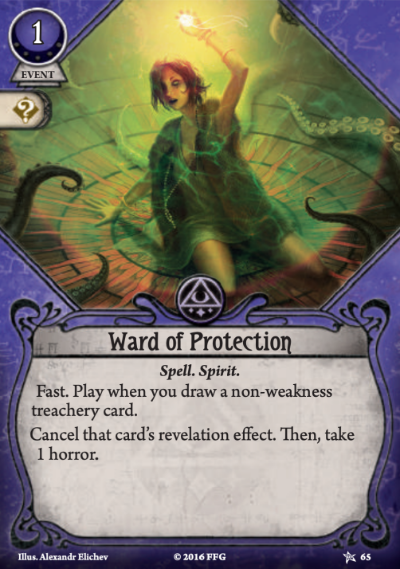
Ward of Protection / Archetype: None
Ward of Protection gained its fame by both being introduced in the core set, and by being one of the rare card that can prevent an Ancient Evils.
In the modern card pool and in True Solo, Ward of Protection fade a bit. It still is quite good at negating a nasty treachery, but costing one card, an horror and a resource is about what a treachery usually costs you, if not more.
For this reason, while Deny Existence can be played quite liberally for value, Ward of Protection requires a more clever use and a better knowledge of the treacheries in the encounter deck.
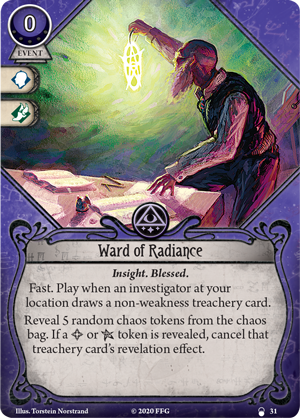
Ward of Radiance / Archetype: Bless – Token Manipulation
Ward of Radiance is the cheaper twin of Ward of Protection. While it is require for you to be able to generate some blesses to be worth it, it takes about 3 blesses to have a 70% success rate in a standard bag.
This card can also be supported by Olive Mc Bride or Favor of the Sun.
Unlike Ward of protection though, it does not have the spell tutoring / upgrading interactions.
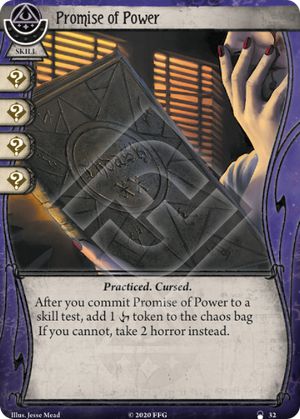
Promise of Power / Archetype: None – Practice Makes Perfect
As a lot of treacheries are about passing a test, 4 wild icons goes a long way to succeed at it. This card is just a staple, and the curse is barely a downside.
It also is Practiced, which make for a very strong Practice Makes Perfect package for investigators with Seeker/Mystic access.
Of all the classes, Mystics have the best and most boring cards to tame the encounter deck. While Alyssa Graham offers interesting decisions and game loop, the other cards are just good, and straightforward to use.
This combination with the natural resilience of Mystics in early campaigns due to their high willpower and sanity makes them less incline to search for different mitigation solution, such as soaks or heals.
Honorable Mentions: Earthly Serenity, Hallowed Chalice, Talisman of Protection
Survivor Cards
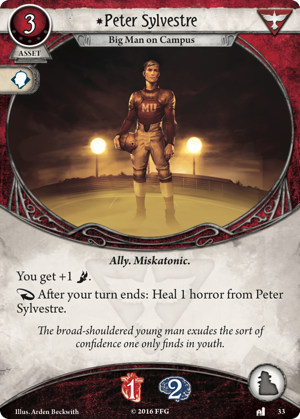
Peter Sylvestre / Archetype: Never die
While the biggest downside of Peter is that it takes the ally slot, he sits comfortably in the leader seat of the good old staples to counter the mythos.
Peter does two great things for you: it soaks one horror per round, and boost your agility. The latter being often tested for damage dealing treacheries, Peter does a great job at softening the encounter deck.
Its level 2 version is very worth it, loved by investigator with mystic access, as it boost the willpower and is dirt cheap to upgrade into with Down the Rabbit Hole.
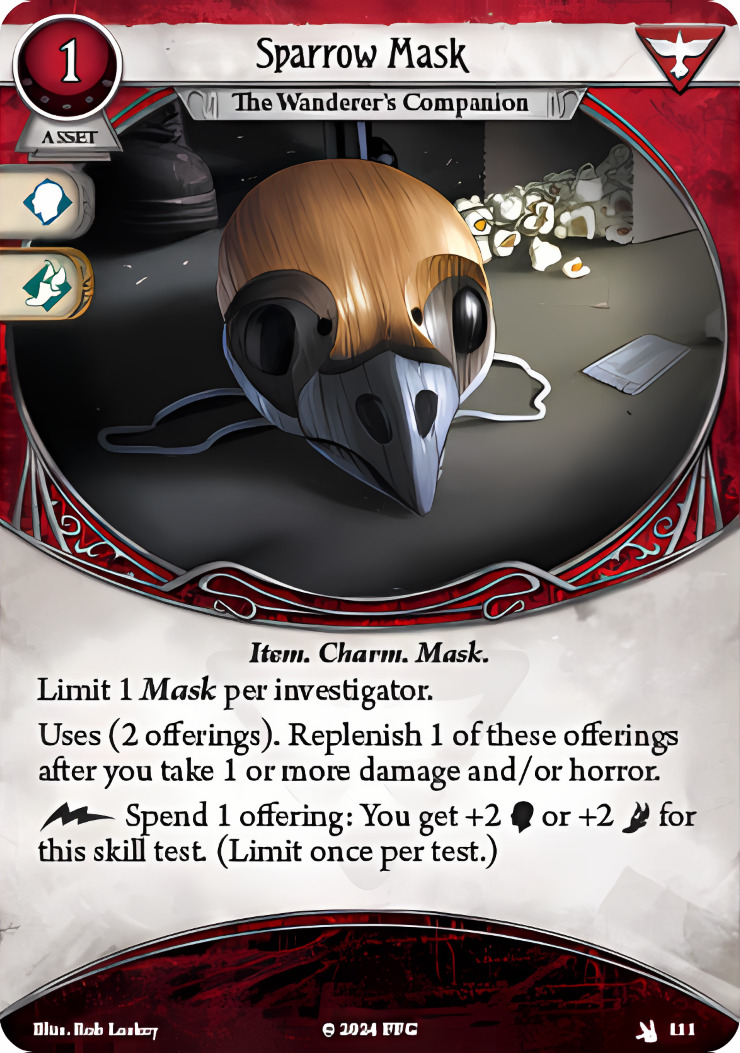
Sparrow Mask / Archetype: Self-harm
This mask is tailored to combat treacheries. It comes loaded with two uses of a +2 against the most tested stats during the mythos phase.
Should you fail a couple tests, it has the nice perk on reloading when taking damage and horror.
The last thing to mention is that as a slotless item, it has a lot of interactions with survivor recursion and Geared-Up
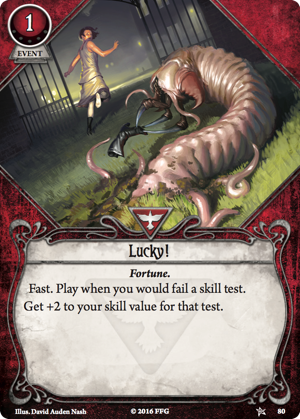
Lucky!/ Archetype: Taking Chances
This staple from the core set is still very relevant, as it is an Unexpected Courage you can use reactively.
It has also the nice effect of mitigating the effect of some treacheries even if you would still fail the test after the +2. A good example is going 4 v 3 against Rotting Remains, drawing the -4 then play Lucky to only take one horror.
The versatility of Lucky! is also its drawback, as it is tempting to play it on many tests, and deciding which one to spend the Lucky! on can be difficult.
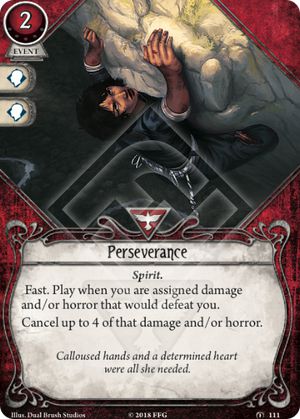
Perseverance / Archetype: Taking Chances – Discard matters – Tech
Perseverance is a quite potent card, as it can be an effective soak 4 for 2 resource and a card. The issue is it is only useful if you are about to be killed otherwise, which is not something usually desirable.
The best comparison for it would be Leather Coat. Leather Coat costs an action upfront, or is a dead card in your hand. Perseverance is a dead card in your hand, unless you need it.
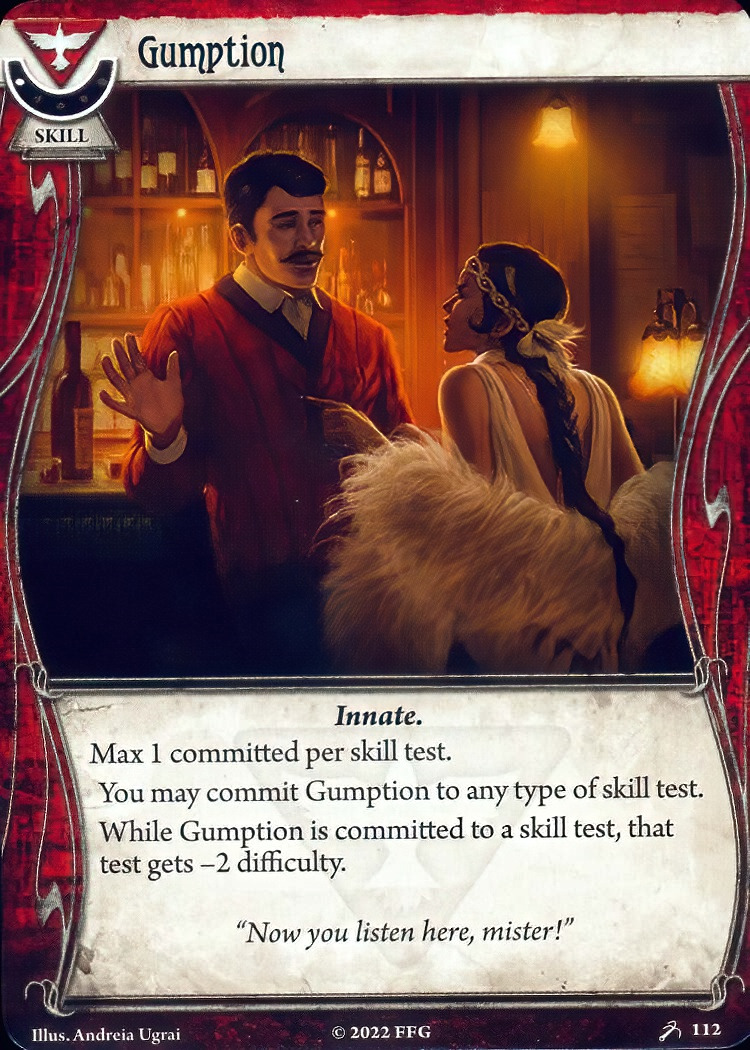
Gumption / Archetype: Test at 0
For all treacheries, Gumption acts at least as an Unexpected Courage.
For fail-by treacheries such as Rotting Remains, though, it adds the benefits of capping the effects of a failed test. Now, even the auto-fail will only result in one horror.
This card is extremely versatile in its use and worth including in a lot of decks, even if you are not pushing a test at 0 archetype.
While they don’t have the raw power of Mystics to nullify treacheries, survivors are quite resilient to the encounter deck, and have multiple strategies to counter it.
They can try to cancel the treachery with A Test of Will, try to pass the tests preventively, using boosts such as Sparrow mask or Grizzled. They can cheat the result with Lucky!, soften the effects with Gumption, or straight up tank the damage and horror with the very good soak cards available to them. Finally, lasting treacheries can be removed from the board with Alter Fate.
Honorable Mentions: Grizzled, Alter Fate, Talisman of Protection, Hunting Jacket, A Test of Will, Alter Fate.
Outro
In the current card pool, every class has a decent selection of card to face the treacheries in the encounter deck.
Guardians have usually a good willpower, supported by good skill cards and soak capabilities. Some seekers might be the most fragile class at low XP, but can make do with good skill cards, or playing Dr Maleson / Forewarned in a clue dropping archetype. Rogues used to be crippled by their low willpower, but have now options to cheat / pay out of the most annoying treacheries. Mystics straight up counter what’s in the deck, and Survivors have so many tanking options they are un-killable should you want to.
With that many options, the Mythos deck should not be that scary anymore. The main question is how much of your deckspace should you want to dedicate to Mythos Prevention?
This is where knowledge of the scenarios and investigators come into play. Some scenarios (in Dunwitch, for example) have treacheries so impactful that it is worth having a silver bullet to counter them. Some investigators with unbalanced stats and hard weaknesses will require to add a couple cards ensuring they wont blow up on one autofail.
For the others, the best solution is to look for cards that can be used both offensively to progress the game, and for mythos defense. Cards such as Lonnie Ritter, Trusted + Guard Dog, I’ve had worse, Well-Connected, Gumption are all great options to avoid being defeated while being able to effectively help you progress the game.