Introduction
In the “5 cool cards to…” posts series, I look at the card pool for the most interesting cards to assist in rounding up a deck that might struggle with some of the challenges required to perform well in true solo.
To keep the posts to a reasonable size, I select cards with the following rules:
- 5 cards maximum per class
- Level 0-2 cards (to maximize the investigators that can access them, and facilitate the use in starting decks)
- Variety of archetypes (to avoid shoehorning players into one deck type)
- Suited for true solo (some cards have amazing value in 2+ players, but are less interesting playing solo).
How to save up on move actions
Moves are one of the most simple and common actions in Arkham Horror LCG. Moves very rarely require a skill tests, and are more often than not pro-active rather than reactive (in contrast to fight actions, for example).
A key characteristics of the game is that most of the locations in scenario starts either out of play or unrevealed, and interactions with unrevealed locations are very limited. For this reason, one of the main task to advance the game is to move around to reveal locations or put new locations into play. This creates one of the major differences between True Solo and multiplayer play. In multiplayer, this task of revealing location is shared amongst the team, while in true Solo this burden falls on a single investigator.
From my estimate, move actions in Solo make up to 1/5th to 1/3rd of the total actions required. As actions are one of the most valuable player resources, finding ways to generate action economy by saving on move actions is a good step toward success.
In this entry, I will look at cards that can help to move around and reveal locations more efficiently.
Neutral cards
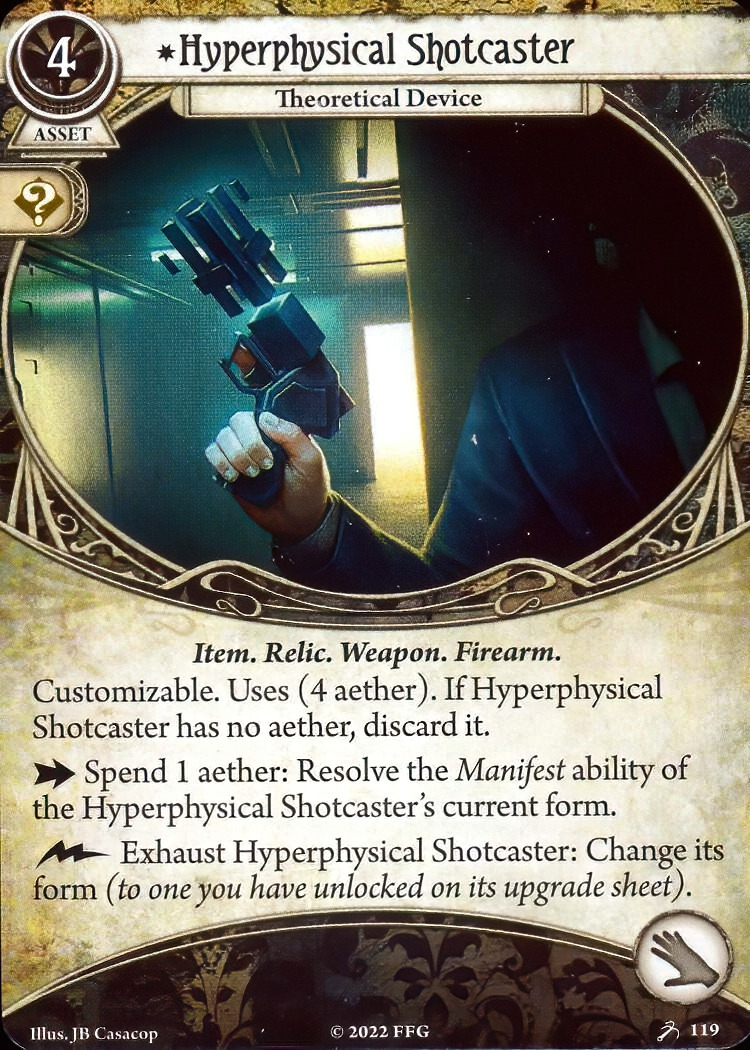
Hyperphysical Shotcaster / Archetype: Use another stat
Hey, it’s me again!. Hyperphysical Shotcaster, with the Translocator upgrade, allows to evade with your highest stat, and offer a move before or after the evade, for either the investigator or a non elite enemy.
While many cards (especially in Rogue) have “evade-like” effects that allows to move afterward, this one of the only one that offer to move before, which is very handy to move into occupied locations.
The card does not strictly allows to move for free, but compresses two actions that are often performed sequentially into one.
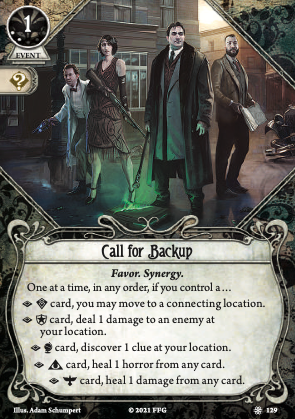
Call for Backup / Archetype: Synergy
Call for Backup requires to control at least a Rogue card to move. Just as the previous card, it does not offers free move, but compresses it with other effect of various utility. Move – Clue – Heal are the easiest to reliably trigger.
If you can stack up enough effects, it offers good value.
Guardian Cards
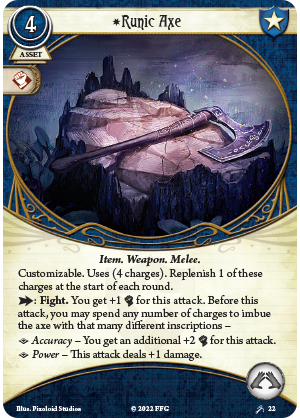
Runic Axe / Archetype: Enemies Matter – Two handed weapon
There is a reason why the Hunt upgrade on the Runic Axe was tabooed. The ability to spend a charge to get a full move action worth is incredibly good.
Of course, to profit from it, you have to have an enemy around, but still, this upgrade will probably save 2-3 moves across a Scenario. If your deck is already playing Runic Axe, it is a very high value upgrade for it.
It is noteworthy that this also enables moving while engaged to an enemy without taking attacks of opportunity. A niche effect but useful in some occasions.
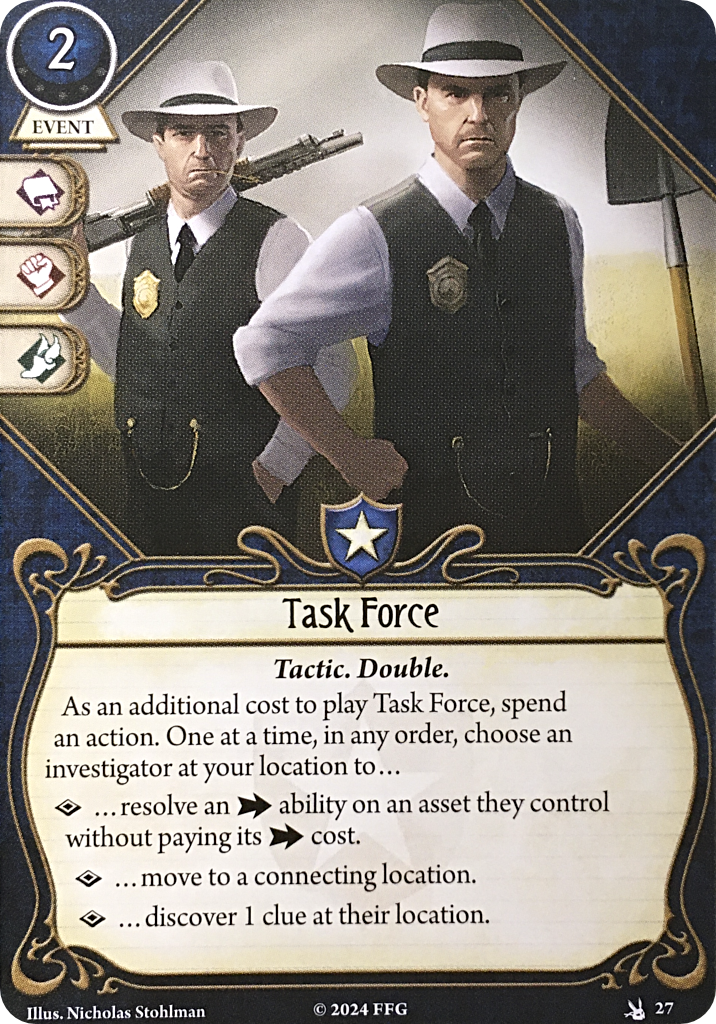
Task Force / Archetype: None
If you just want to move, Task force is actually costing two resources, a card and two actions to do it. Yeurk!
However, getting a clue before/after moving is very easy to trigger, an a good pacing for True Solo.
Except if your deck really struggle to get clues, this card is only worth including if you can benefit from the third activate action at least some of the time.
Time to face the hard truth: in Solo, guardians have very bad mobility. The main moving gimmick for guardians is Safeguard, that allows to piggyback other investigators on their move. In Solo, there is very little they can do to move faster.
Some cards like On the Trail or Righteous Hunt do allows to move toward a distant enemy, but in Solo most of the enemies will spawn at your location, and they are effectively useless.
Seeker Cards
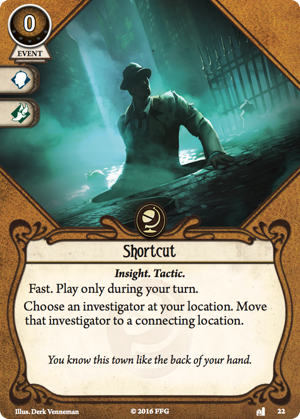
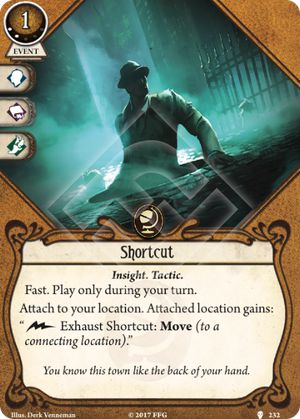
Shortcut / Archetype: None
One card for a free move. Shortcut is a staple at any player count since it was released.
Notably, this card allows to move while engaged to an enemy. This can be handy when racing toward a resign location at the end of a scenario.
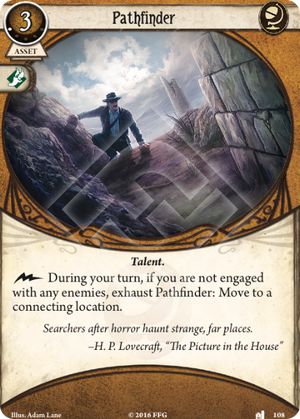
Pathfinder / Archetype: None
This card, even with the +1XP taboo, is incredible. In True Solo, you can expect to save at the very least 5-6 move actions should you draw it in your opening hand.
The only downsides are the relatively hefty cost and the rather useless icon if you draw it late in a scenario. You also cannot move while engaged to an enemy.
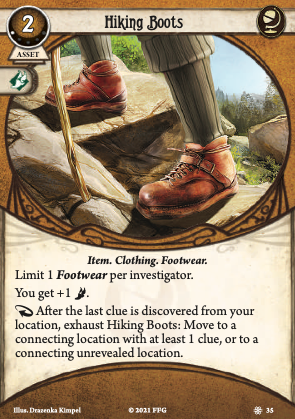
Hiking Boots / Archetype: Geared-Up – Clue Dropping – Agility matters
The direct competitor to Pathfinder. It is cheaper both in resource and XP, and grants a +1 agility bonus. However, it will not likely grant as many free moves in a scenario, as its triggering condition is more restrictive.
I tend to prefer Hiking Boots to Pathfinder in decks that either care for items (such as Geared-Up) or about the agility (Jack Monterey and Trish Scarbourough). Running one of each is also an option.
If you play a clue dropping archetype, you can sometimes get extra triggers when picking-up a dropped clue on a central location.
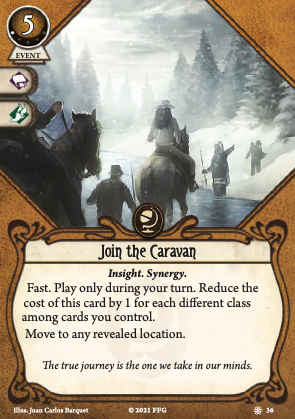
Join the Caravan / Archetype: Synergy – Tech
In the vast majority of case, just running Shortcut is better than using this card, because it is cheaper and allows to reveal locations, which this card cannot do.
However, Join the Caravan can break open any scenario where back-tracking is important, especially in the “race back to” situations at the end of some of them.
Due to the cost, I would only consider it for decks that consistently controls 3+ classes.
Shortcut (2)/ Archetype: Tech
Paying 2XP and a resource for a single fast move is not worth it. In True Solo, other investigators cannot generate extra free moves out of it.
Therefore, the upgrade from Shortcut (0) must be really justified. The main reason to upgrade is if the campaigns has a lot of scenarios with central locations, backtracking situations, or treacheries that move you around.
Most of the time, sticking to Shortcut (0) is fine.
The mobility of Seekers is insane. They have with Shortcut and Pathfinder the most staple “free moves” event and asset. What is almost disgusting is that they have many other options to play in various archetypes.
Honorable mentions: Eon Chart, Esoteric Atlas, The Truth Beckons
Rogue Cards
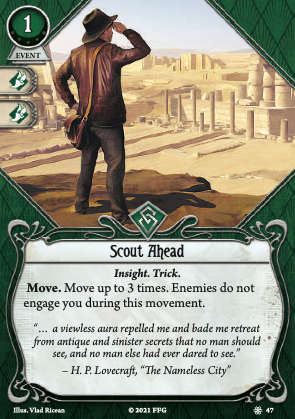
Scout Ahead / Archetype: Tech – Chuck Fergus
Scout Ahead is a solid movement compression card, allowing you to save up to two moves actions if you play it at full value.
Its most common use is to speed up backtracking, and avoiding engagement is great for that. Moreover, it is notable that this card allows to reveal locations, which can be interesting if you intend to play cards that can collect clues from a distance.
With two agility icons, it’s a solid card if you need more mobility, and a great candidate for an Adaptable tech card.
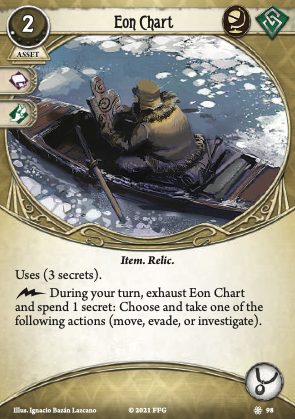
Eon Chart / Archetype: Item – Scavenging – Secret manipulation
Also available to Seekers, the level 1 version of Eon Chart give two basic actions for two resources and a card, which is nothing to go crazy about. Moves are the easiest actions to use.
The interesting part about it is that because it has the item trait, it is super easy to find added value. Eon Chart can be played at a discount by Geared-Up or Unearth the Ancient(2), played fast and resold by Joey the Rat(3), scavenged back, recharged, etc.
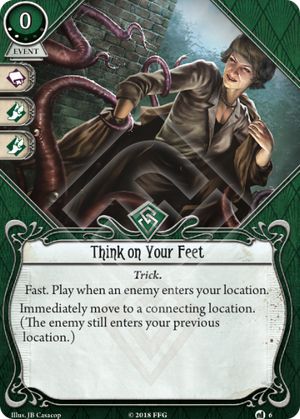
Think on Your Feet / Archetype: Enemy avoidance
This card is deceptively good. Played at is best, it will save you an enemy attack, an evade, and give you a free move. Most of the time, it will still save an evade and a move.
Even though the free move is why this card made the list, the true action saving on this card is to avoid a annoying fight / evade you would have to spend resources on.
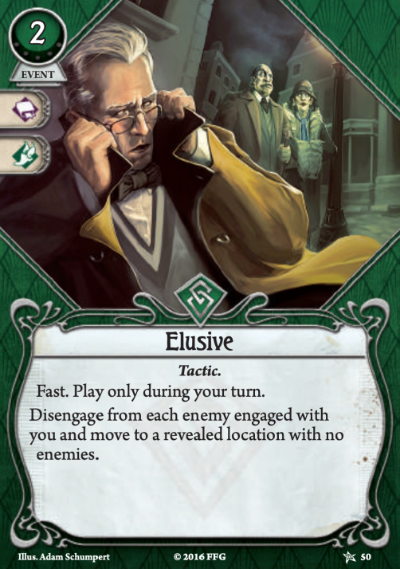
Elusive / Archetype: Enemy avoidance – Chuck Fergus
This card is a rare instance where a Taboo intended to nerf the card actually made it better in True Solo. While the original text allowed to cheat certain scenarios with abusive accross the board motion, the new text reads “move to a connecting location with no enemies”. You can now reveal a new location out of Elusive, which is great in Solo!
Even though Think on Your Feet has a level 0 version of the card, I consider Elusive to be better. It cost 1 more resource, but can be used to disengage from multiple enemies, and does not care whether they spawned on you or not.
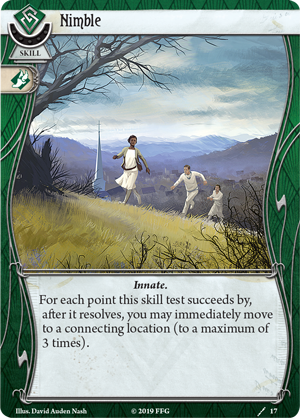
Nimble/ Archetype: Agility Matters – Oversucceed
Nimble is certainly the only level 0 skill that can give you 3 actions. Of course, you will very rarely both need to move as much and have the ability to oversucceed that much on demand.
Yet, Nimble is decent as long as you can reliably generate a free move. This can be done through evasion, or card testing agility such as Grift, British Bull Dog and Thieves’ Kit..
Rogues come a close second to Seekers when it comes to mobility. While they don’t have card as easy to use as Pathfinder and Shortcut, they can save actions by bunching moves together (Scout Ahead, Haste), or moving around enemies (Think on Your Feet, Elusive).
Of course, Rogues are also able to easily generate extra actions (Leo di Luca, Quick-Thinking, etc) which adds up to their mobility.
Honorable mentions: Haste, Leo di Luca, Quick-Thinking, Honed Instinct, Swift Reflexes
Mystic Cards
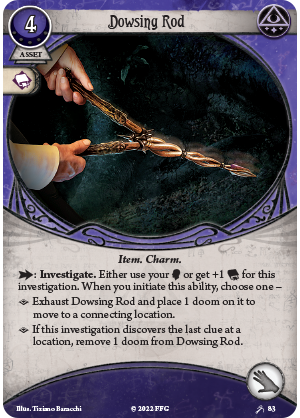
Dowsing Rod / Archetype: Will matters – Doom
What Dowsing Rod allows to do is to compress move and investigate actions together. Yes, you cannot trigger it at every use, but it will probably give you 2-3 free moves in a scenario, which is enough to justify it being played as your investigate asset for low intellect mystics.
In Solo, the best sequences to profit are :
Trigger the doom and move / investigate a location.
If its a 2 clues location, investigate again to clear the doom.
If its a 1 clue location, move again and investigate to clear the doom.
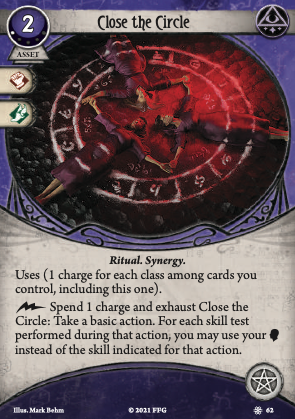
Close the Circle / Archetype: Will matters – Synergy
Close the Circle gives you extra basic actions. Moving is a basic action. Having the option to use your charges to move is a very nice way to make sure you always get full value of this asset.
In a way, it is very similar to the tabooed Eon Chart, but with the option to use your brain for your actions. It is however notable that its not nearly as easy to find an recur, so while I’m perfectly happy with 3 secrets on Eon Chart, 3 charges is where Close the Circle starts to be good, but I am only including it in a deck if I can get 4+ charge on it.
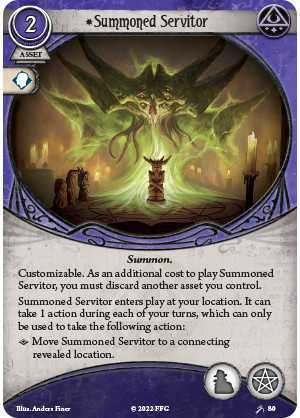
Summoned Servitor / Archetype: None
Summoned Servitor, with the Wings of Night upgrade, allows to move along with the servitor.
There are two major drawbacks for this card, though. First, the cost of the card is hefty. Having to discard a controlled asset and dedicate two slots for it is a large price to pay. But the most annoying part to be usable in True Solo is that you cannot move with the servitor to enter an unrevealed location, which is often what you want to do in Solo.
Ultimately, the Wings of Night upgrade and the Summoned Servitor are only useful if you go all-in on a dedicated build around deck.
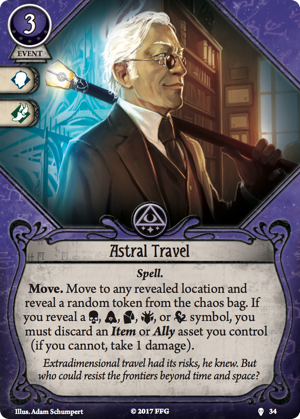
Astral Travel / Archetype: Tech
Astral Travel is the parfait example of a Tech card. It is only useful for backtracking, and quite good at that.
The potential downsides are not really relevant when you actually want to play it (which will be to get to the exit of a scenario).
Except for specific scenarios, though, this card is just a bit too costly and hindered by the inability to reveal new locations.
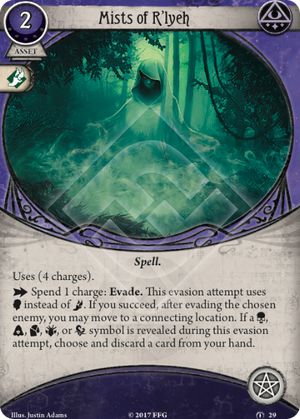
Mists of R’lyeh / Archetype: Will matters – Evade matters
This card is very similar to other mystic assets that grant a move or action after an evasion (such as Blur or Shroud of Shadows)
It combines both enemy management and mobility, two important aspects of the true Solo game. If you intend to include evading for enemy management, these are a great choice.
While Mystics don’t have nearly as much mobility as Seekers or Rogues, they do have a few ways to generate move actions or to compress move actions with another useful action (evade or investigates, mostly). The rest is made of very niche card that are either complete build-around or pure tech.
Honorable mentions : Blur, Shroud of Shadows
Survivor Cards
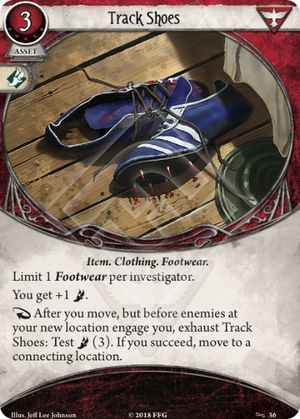
Track Shoes / Archetype: Agility matters
To actually generate free moves, this card requires to both have already moved, and to pass an agility test.
If we disregard the use of this card to abuse Drawing Thin, what can it do for you?
It is fantastic for backtracking, as it both saves moves and allows to jump over enemies. It can however feel clunky moving forward, as most of the time, you want to investigate the locations just revealed. Some decks can be built to get around that by picking-up left behind clues.
Overall, this card is mostly useful if you can profit from the +1 agility it offers. Wendy and Rita are prime users of Track Shoes.
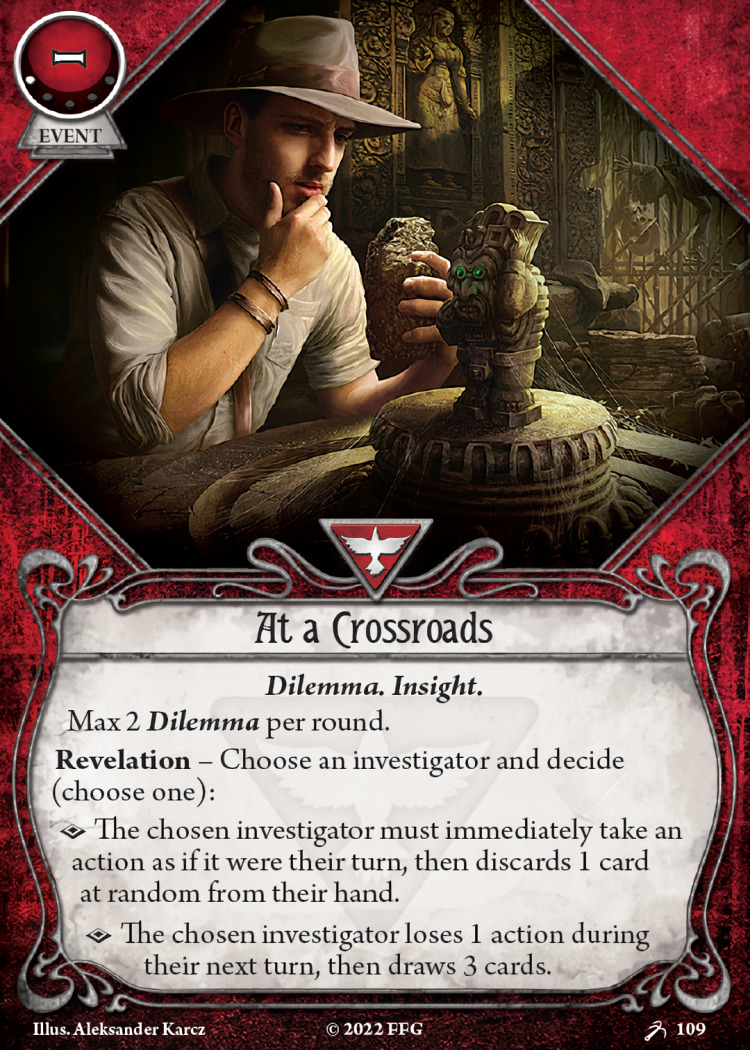
At a Crossroads / Archetype: Dilemma
At a Crossroads gives you one action you can use to move should you need it, at the cost of two cards. To be honest, it’s not a great rate, and I would probably only use it near the end of a scenario.
The good thing is that the second option, to loose an action for a net gain of two cards is perfectly playable.
An ok card overall, but nothing exciting.
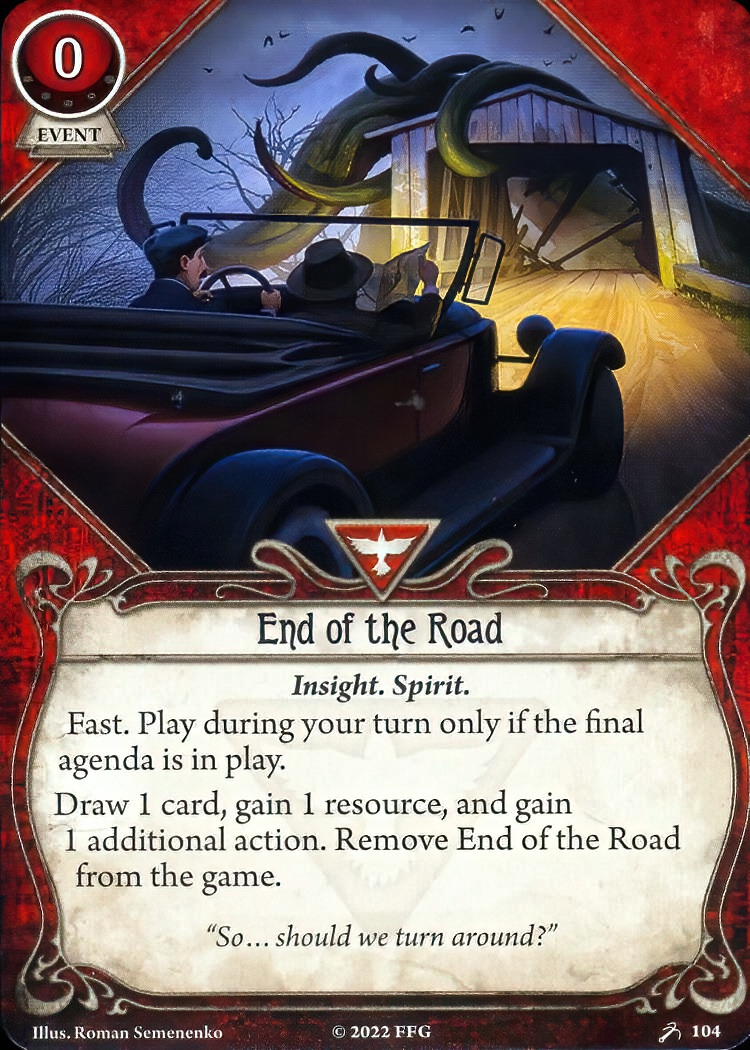
End of the Road / Archetype: Discard
While you can only play it near the end of a scenario, this cards gives you a very nice tempo boost. A net gain of an action and a resource at level 0 is about as good as you can get. And the last agenda is often when you profit the most from the extra action.
To mitigate the fact that this card is dead until the last agenda comes into play, investigators with discard synergies can pitch this card to feed their abilities, and recur it later with Resourceful.
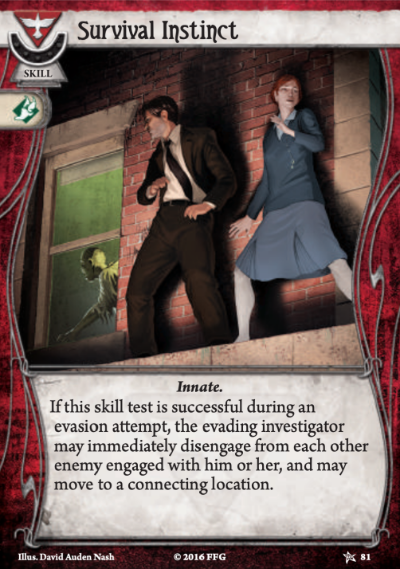
Survival Instinct / Archetype: Evade matters
Survival Instinct allows to compress evade and move action together. Just as for the Mystics evade spells, these to action types are very useful together and make for a useful include if evading is your main enemy management plan.
When it comes to mobility, survivors are taking inspiration in every class, while not being as good than each of them. They can use Track Shoes as a clunkier version of Seekers Hiking Boots, get extra actions with hoop to jump through than Rogues don’t have, or move and evade as Mystics do, but using a skill instead of assets.
It is notable that while Survivor don’t have a very good card pool for mobility, some investigators have great mobility in their abilities (Duke and Rita, for example)
Outro
Not every classes are equal when it comes to moving around. Seekers can invest in a few card to generate a lot of free moves. Rogues generate a lot of extra actions, for which moves are a great use as they are actions that do not require tests. Mystics and Survivor are not nearly as consistent, but have a few cards that can either generate actions or tie moves to another action type. Guardians, however, suffer a lot in True Solo of the lack of Safeguard. They will either have to use their secondary class, or find action compression otherwise.
In the end, a basic move action is still a very good action that advances the game. Saving on moves is great as it’s one of the most common action type, but you can usually get by without it if your deck has great action economy otherwise.
There are exceptions to every rule, and some specific scenarios have a “race against the clock” moment where extra moves can make things a lot easier.